


Electronic games are any games that include an electronic component, or online versions of games that also belong to another category.
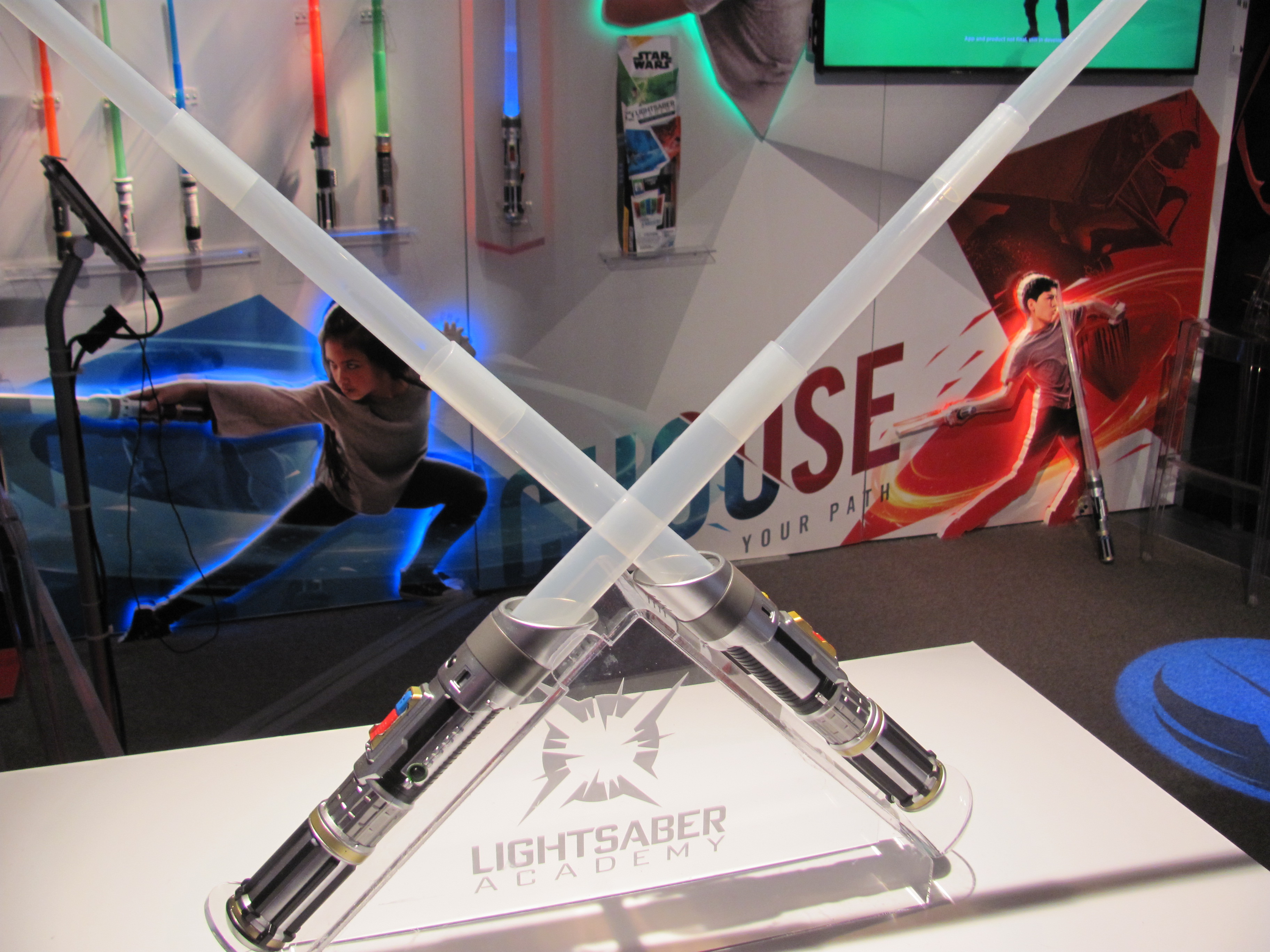
 Lightsaber Academy, one of Hasbro’s offerings for Star Wars Triple Force Friday in October, allows kids to train as Jedi with their choice of master. A switch hidden in the hilt selects between several iconic characters, such as Yoda and Obi-Wan Kenobi, with matching changes to the toy’s color and audio instructions.
The lightsaber’s audio and motion-sensor technology guides a user through a variety of training exercises and when connected by Bluetooth to a local mobile device can track and display performance. Progress also advances in a head-to-head game available when two lightsabers are connected.
Information, though, is stored in the toy, so that a player’s ranking carries with them when they visit a friend’s house and connect to a different device.
At release, a single lightsaber will retail for $50.
- Comments Off on Toy Fair 2019—Star Wars Lightsaber Academy
Toy Fair 2019—Stranger Things Games
20 Feb
Posted by David Miller as Electronic Games, Modern Board Games, RPGs
Presented by Hasbro at New York Toy Fair were three Stranger Things games coming to retail at the beginning of May.
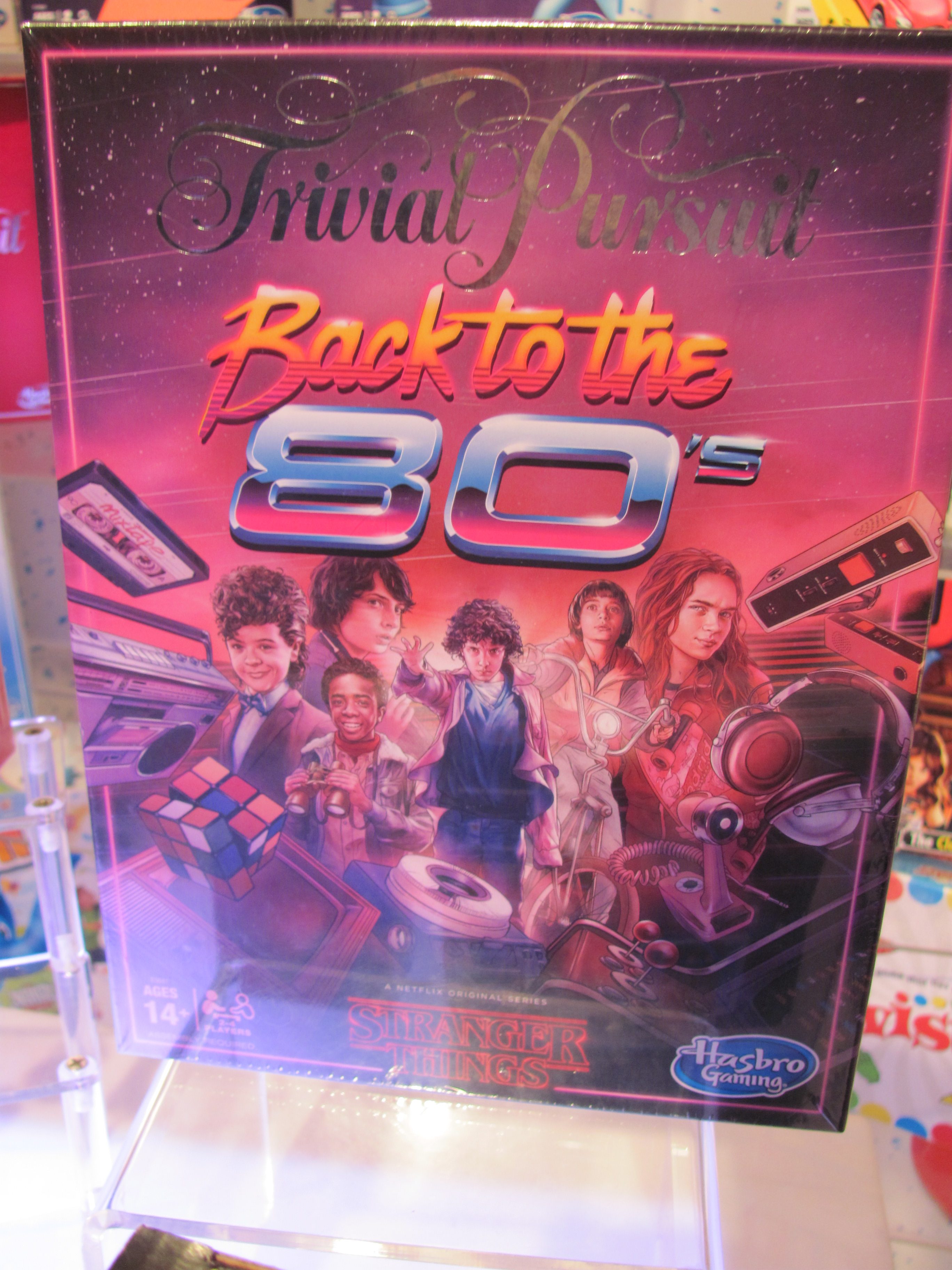
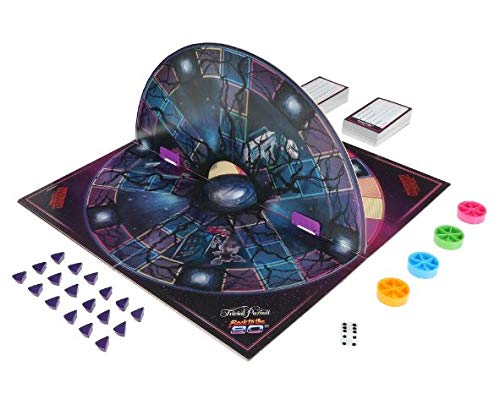
Stranger Things Back to the 80s Trivial Pursuit ($20) includes questions about the show and 1980s pop culture. It also features a board that flips to an alternative movement track representing the Upside Down. When a player’s piece lands on a portal, they’re all sent to the Upside Down, where it’s possible to lose a wedge.
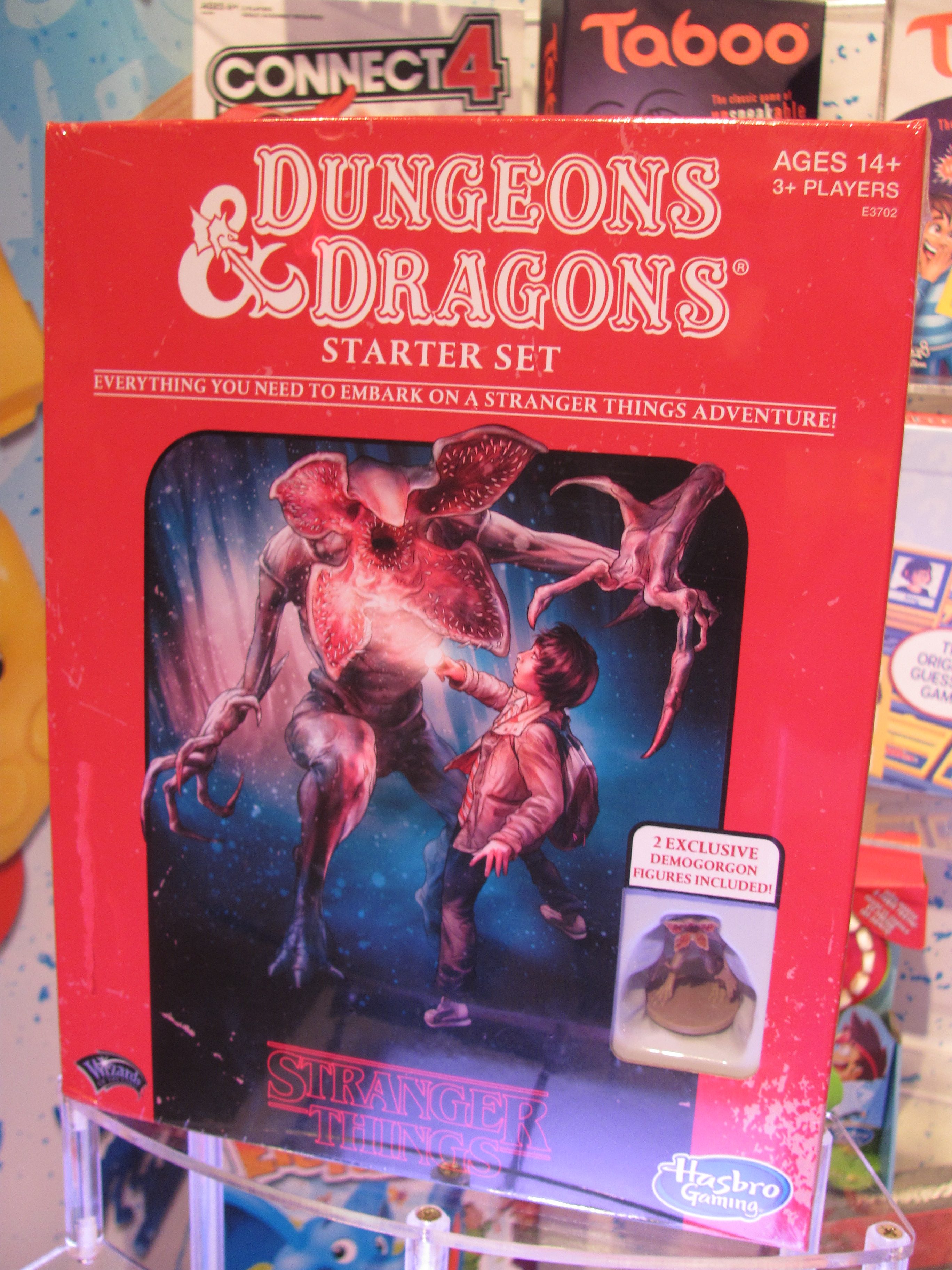
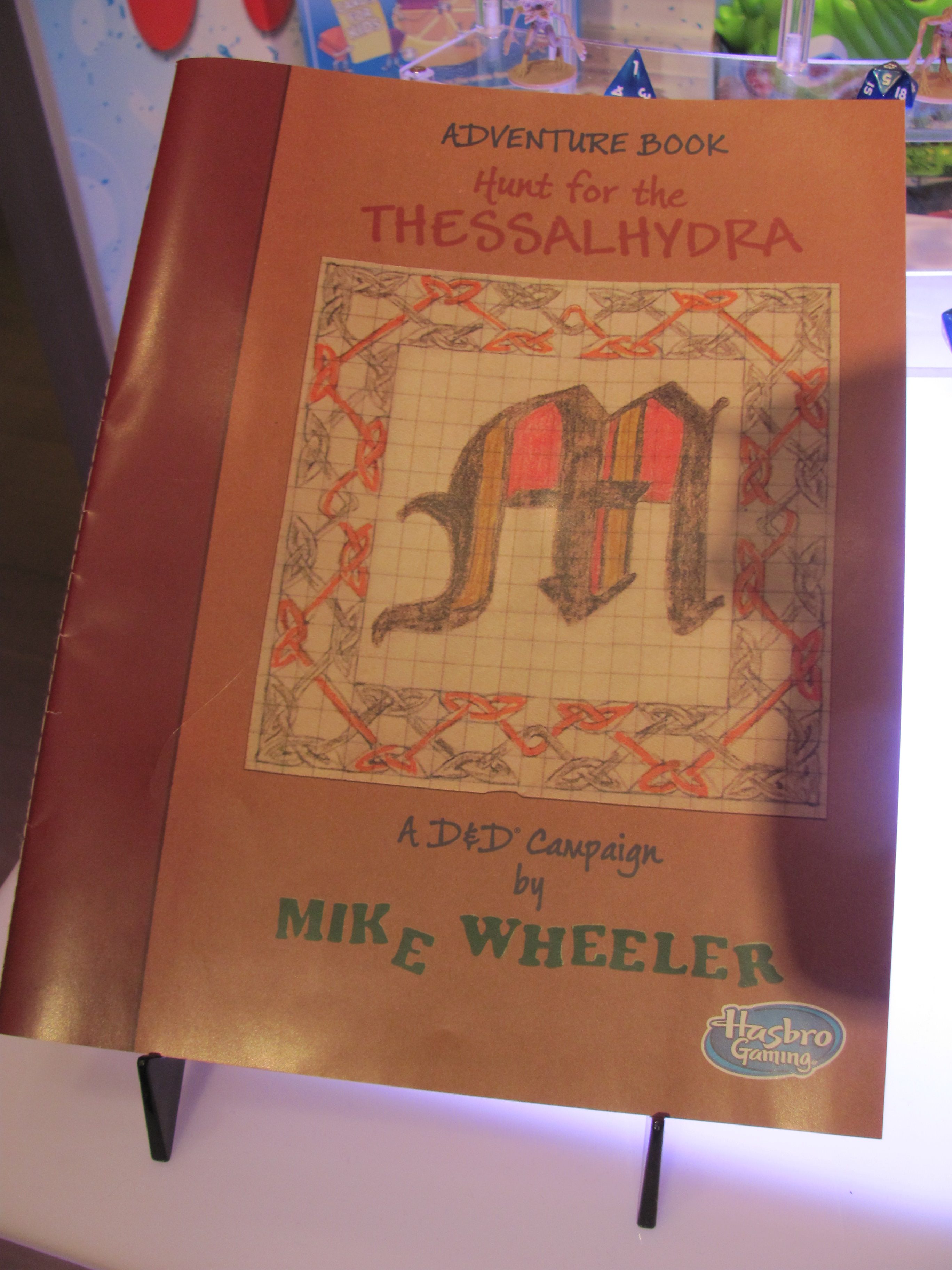
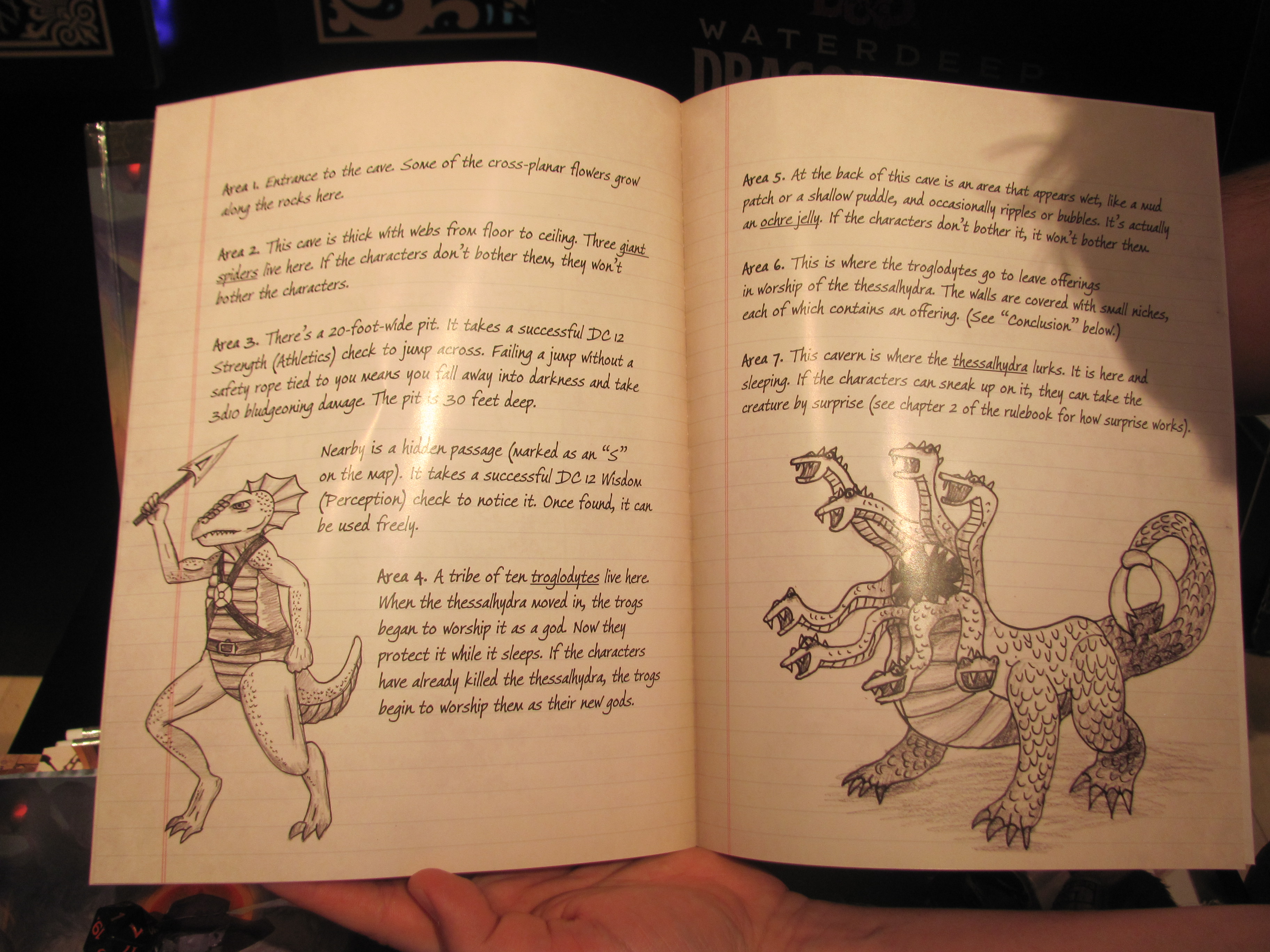
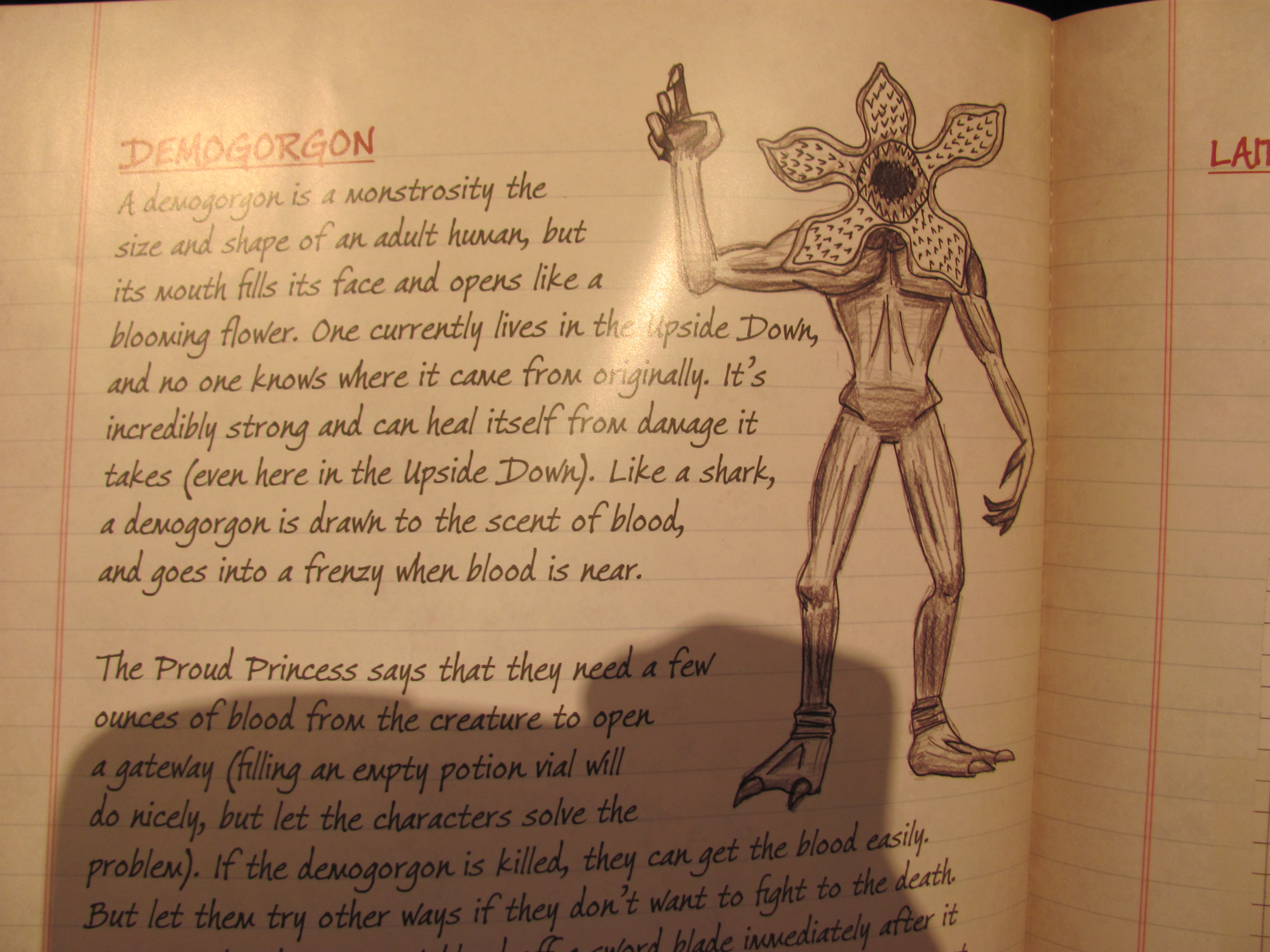
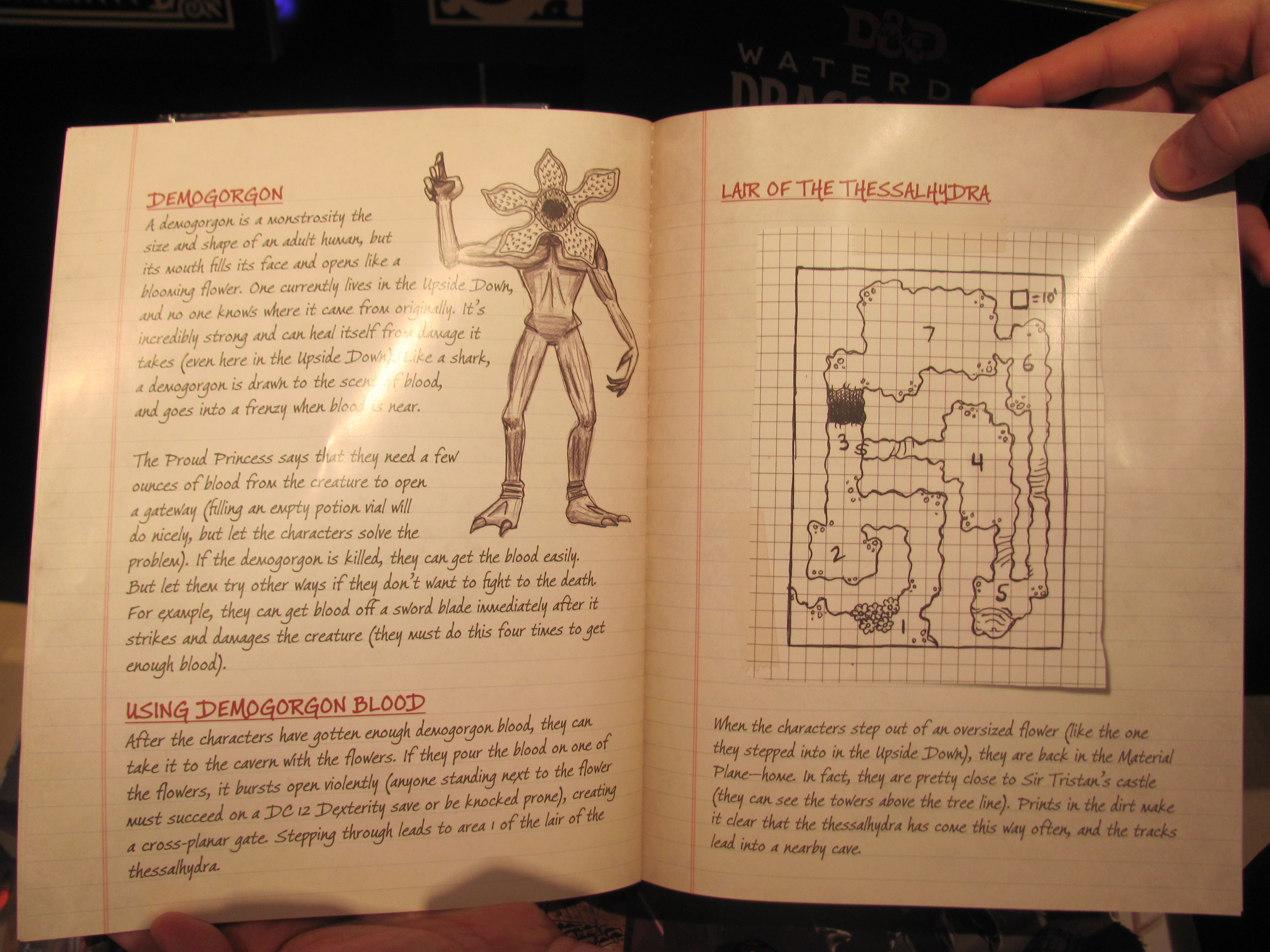
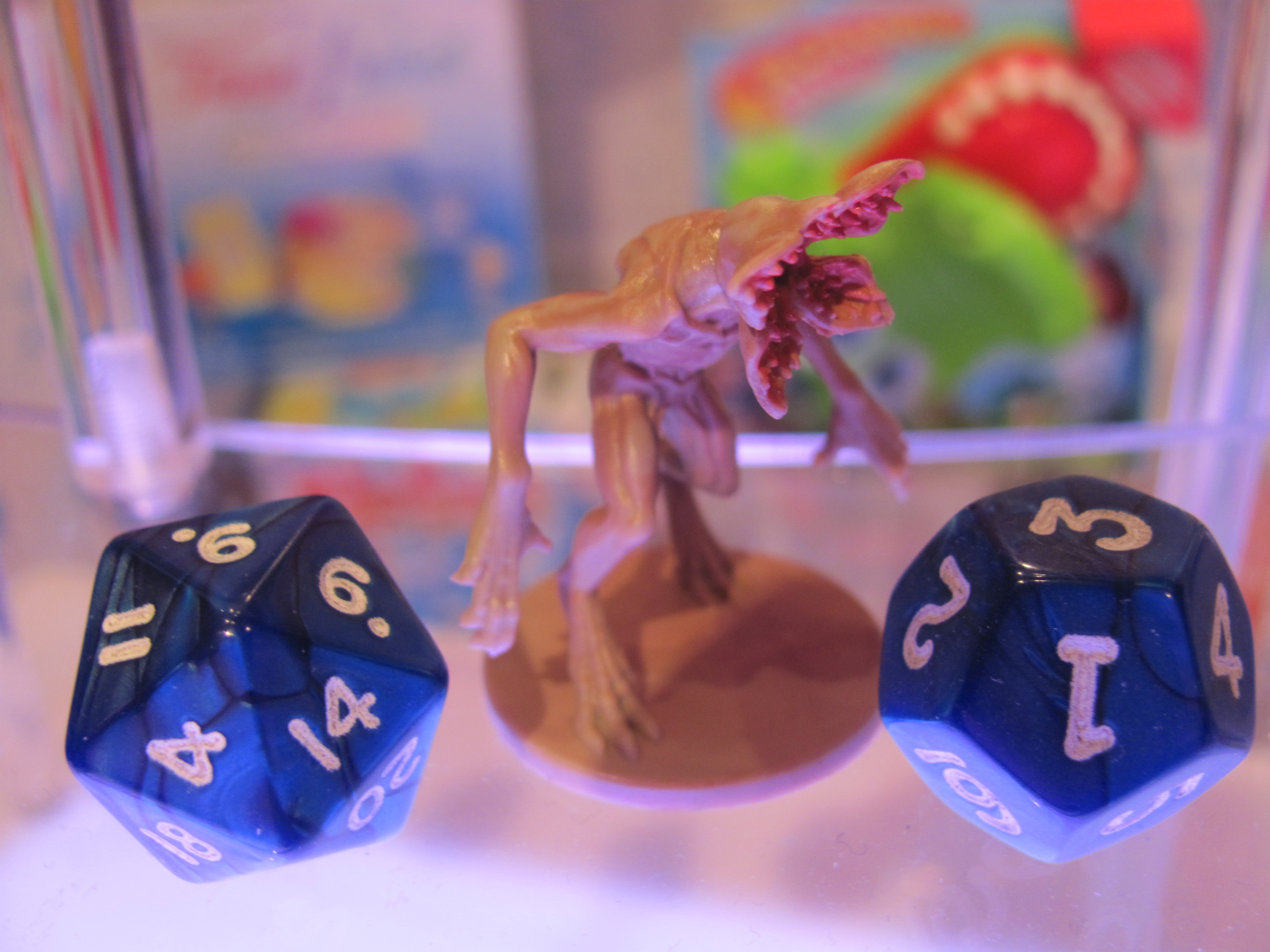
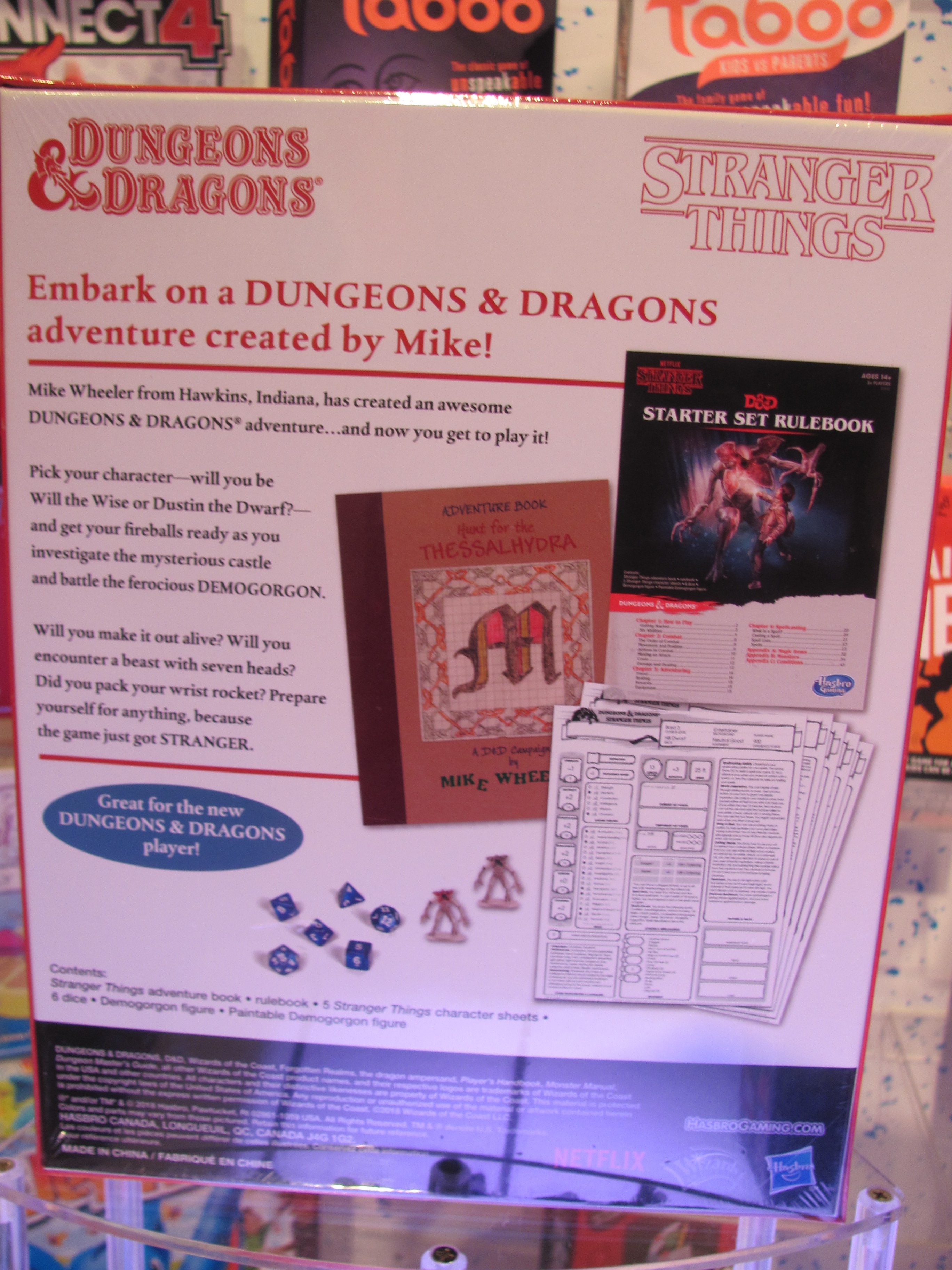
A Stranger Things Dungeons & Dragons Starter Set ($25) includes essential rules, dice, two Demogorgon plastic figures (one painted, one not), an adventure book, and character sheets representing those played in the show.
The Stranger Things Palace Arcade console ($30) is a working miniaturized arcade-style video game system with 20 classic titles (such as Pac-Man and Galaga) and 16 more based on the show.


- Comments Off on Toy Fair 2019—Stranger Things Games
2018 A Difficult Year For Hasbro But Not For D&D Or MtG
11 Feb
Posted by David Miller as Card Games, CCGs, Classic Board Games, Electronic Games, Miniatures, Modern Board Games, RPGs, War Games
 According to market data firm The NPD Group, annual retail sales of toys in the United States declined 2 percent from 2017 to 2018. For games, that decline was 1 percent.
Against that backdrop, Hasbro has reported that 2018 net revenue fell 12% compared to 2017, mostly due to the Toys “R” Us bankruptcy. The retailer was Hasbro’s third largest customer in the United States, second in Europe and Asia. Additional earnings pressure resulted from other retailers moving to leaner inventories and from political-economic events in Europe (particularly the U.K.).
The failure of Toys “R” Us meant not only the loss of a major retail outlet for Hasbro but also competition from a large amount of inventory being liquidated at significant discount. Excluding Toys “R” Us, however, sales at existing U.S. and Canadian retailers were up slightly, “mid-single digits” for the games category.
While Hasbro recorded an overall year-to-year drop in revenue of 9 percent in its franchise brands category and 12 percent in its gaming category, Beyblade, Dungeons & Dragons, Monopoly, and Magic: The Gathering all grew in 2018. Also on the upside among games were Jenga and Don’t Step in It, offset by downturns to Pie Face and Speak Out. When viewed as a broader category (MtG and Monopoly are normally counted in franchise brands), games were only down 4 percent to $1.4 billion compared to 2017.
Again, 2018 was a record year for Dungeons & Dragons. Regarding the future, CEO Brian Goldner said, “Our plans for an expanded universe of gaming behind D&D is taking shape in analog and digital game play.”
Noting that Magic: The Gathering Arena is still in the beta-testing phase, Goldner also revealed that the so-far-PC-only platform saw 350 million games played in the 4th quarter. Viewership on Twitch doubled. And Arena users are averaging 8 hours played per week.
- Comments Off on 2018 A Difficult Year For Hasbro But Not For D&D Or MtG
Game Bandit
10 Feb
Posted by David Miller as Card Games, CCGs, Electronic Games, Modern Board Games, RPGs, War Games
 Amazon deals:
- Twilight Struggle from GMT for 46% off.
- Lords of Waterdeep from WOTC for 41% off.
- Dungeons & Dragons Players Handbook from WOTC for 44% off.
- Star Wars Edge of the Empire Beginner Game from Fantasy Flight Games for 42% off.
- In the Year of the Dragon from Ravensburger for 56% off.
- Jenga from Hasbro for 43% off.
- Sushi Go! from Gamewright for 47% off.
- Codenames Duet from Czech Games Edition for 36% off.
- Betrayal at House on the Hill from WOTC for 44% off.
- Mastermind from Pressman for 44% off.
- Googly Eyes from Goliath for 45% off.
- Sequence from Jax for 50% off.
- Ultimate Werewolf Deluxe Edition for 48% off.
- Clank! from Renegade for 36% off.
- Pandemic Legacy Season 2 from Z-Man for 42% off.
- Conan from Monolith for 49% off.
- Dominion Intrigue (second edition) for 37% off and Dominion Empires for 36% off.
- Clans of Caledonia from Karma Games for 39% off.
- Islebound from Red Raven Game for 46% off.
- Harry Potter Magical Beasts Game from Pressman for 55% off.
- Power Grid from Rio Grande Games for 36% off and Power Grid Deluxe for 35% off.
- The Colonists from Mayfair for 52% off.
- Agricola from Mayfair for 35% off.
- SeaFall from Plaid Hat for 71% off.
- Experimental Meds expansion for Pandemic: The Cure from Z-Man for 60% off.
- The Rose King from Thames & Kosmos for 46% off.
- SpyNet from Z-Man for 53% off.
- Smugglers from Thames & Kosmos for 77% off.
- Space Cadets Away Missions from Stronghold Games for 45% off.
- Otys from Asmodee for 49% off.
- New York 1901 from Blue Orange Games for 38% off.
- 1846: The Race for the Midwest from GMT for 39% off.
- Exoplanets from Greater Than Games for 42% off.
- Atari Missile Command from IDW for 67% off.
- The Lord of the Rings: Journey to Mordor from FFG for 67% off.
- Kingdom Builder from Queen Games for 40% off.
- Sons of Anarchy, Men of Mayhem from Gale Force 9 for 71% off.
- Tyrants of the Underdark from Gale Force 9 for 35% off.
- Broom Service from Ravensburger for 39% off.
- Starship Samurai from Plaid Hat Games for 38% off.
- Survive! Space Attack from Stronghold Games for 48% off.
- Stallion Canyon expansion for Flip ’em Up from Pretzel Games for 76% off.
- Robotech RPG Tactics from Palladium for 51% off.
- Black Fleet from Asmodee for 50% off.
- Mythe from Funforge for 76% off.
- Dungeons & Dragons: Assault of the Giants Premium Edition from WizKids for 44% off.
- H.P. Lovecraft’s Kingsport Festival from Passport Games for 62% off.
- Terminator Genisys from River Horse for 64% off.
- How to Train Your Dragon: Terror of the Sea for 75% off.
- Richard the Lionheart from CMON for 44% off.
- Level 7 Invasion by Privateer Press for 46% off.
- Cave Troll from FFG for 46% off.
- Fire & Axe from IDW for 60% off.
- Minuscule from Asmodee for 51% off.
- Neptun from Queen Games for 58% off.
Emily Reviews is giving away Are You Dumber Than a Box of Rocks? from University Games.
OSR-style roleplaying games are featured in DriveThruRPG’s Good Ol’ Games Sale.
Current offers at Bundle of Holding include Mutants & Masterminds Earth-Prime, with the Basic Hero Handbook in the Starter Collection and full core rulebook in the Bonus Collection, Shadowrun 5E Essentials, with the rulebook and key supplements, and Shadowrun 5E Runs & Guns, with additional supplements.
Zatu Games (U.K.) is giving away Duelosaur Island from Pandasaurus Games. Enter with a picture of game night-date night.
The Inside Voices group is giving away a package of board game accessories, including a game tracker from Daft Concepts, a Quiver card case, and a game bag from Board Game Tables.
Handelabra’s digital board games, including Bottom of the 9th and Sentinels of the Multiverse, are on-sale for $1.
The Call of Cthulhu video game is 25% off on Steam.
Brawlin’ Brothers is giving away The Big Score from Van Ryder Games.
GJJGames is giving away five copies of The Board Game Designer’s Guide audio book.
Mayday Games’ Winter Sale runs through the 15th with buy-one-get-one on Poetry Slam and Bad Doctor, and other games up to 60% off.
Making Time for Memories is giving away two Harry Potter games from Pressman: Triwizard Board Game and Magical Beasts Game.
- Comments Off on Game Bandit
Hot Jobs
07 Feb
Posted by David Miller as Card Games, CCGs, Electronic Games, Miniatures, Modern Board Games, RPGs, War Games
 Troy University in Alabama is looking for adjunct faculty with tabletop experience to teach online Game Design and Development classes.
Along with several sales and distribution positions, Learning Resources has an opening for a Marketing Coordinator to handle social media and influencer campaigns and support trade shows.
At Educational Insights in Gardena, California, there are opportunities for an Associate Marketing Manager, to manage PR, social media, and the company’s customer loyalty program, and a Product Manager, to lead conceptualization, manage vendor relationships, and collaborate with functional teams as required in the development of new products.
ThinkFun in Alexandria, Virginia has an opening for a Human Resources Manager.
Wizards of the Coast in Renton, Washington is recruiting for:
- Principal Game Designer, requiring significant experience and a passion for Magic, The Gathering.
- Creative Lead to help grow the company’s digital business (Magic, D&D, and Avalon Hill).
- Director of Communications and Publicity, skilled at both corporate and brand-level communications.
- Product Marketing Manager, supporting regional development and localization for MtG.
- Principal Game Designer for digital publishing, requiring at least 8 years of AAA experience.
Tabletop Tycoon in Londonderry, New Hampshire needs an Accounting & Bookkeeping Lead. Responsibilities include developing budgets, reviewing invoices, and managing workflows.

Games Workshop has many openings in sales and retail, also one for a Trainee Citadel Miniatures Designer and a one for a Visual Merchandising Manager. The former will sculpt minis. The latter will create product displays.
An unnamed United States board game manufacturer is looking for a UK Marketing Director, among who’s responsibilities will be managing two PR companies and an advertising agency.
Bezier Games is in need of an experienced, full-time Social Media Manager to generate buzz. The position is based in Knoxville, Tennessee.
Renegade Game Studios is seeking a Development Coordinator to manage the playtesting process from its San Diego office. The company is also looking for a Video Editor to help with 1-2 projects per month.
Atlas Games has an opening for a Marketing Coordinator in Duluth, Minnesota. The successful candidate must have industry knowledge, as well as skills in writing, editing, analytics, and task management.
- Comments Off on Hot Jobs
2018 Scoreboard
01 Jan
Posted by David Miller as CCGs, Classic Board Games, Electronic Games, Modern Board Games, Other
 A group of senior high school students at the American British Academy in Muscat set a new record for computer processor built from dominoes. With 15,000 dominoes, they constructed a 5-bit adder that can sum numbers up to 63. [For a fascinating explanation of how this works, I suggest this video from the person who built the 4-bit adder.]
Keisuke Fukuchi of Japan took home the trophy at the World Othello Championship held in Prague, Czech Republic. At 11 years of age, he’s the youngest champion ever in the tournament’s 42 year history. On his flight home via All Nippon Airways, a congratulations was announced by the pilot, Kunihiko Tanida, the previous record holder for youngest Othello champion (which he had held since 1982).
 The World Chess Hall of Fame in St. Louis reclaimed the record for the world’s largest Chess piece. It previously held the record with a 14 foot tall king from 2012 to 2014 but was then eclipsed by a school in the town of Kalmthout, Belgium. The new record-making piece is a 20 foot tall black Staunton king with a base of 9 feet 2 inches and a weight of 10,860 pounds. It was hand carved from African Sapele Mahogany.
Magnus Carlsen of Norway successfully defended his World Chess Champion title against Fabiano Caruana of the United States by intentionally playing for a draw in standard time controls and then winning three straight in rapid tie-breaks. At the World Rapid Chess Championship, though, Carlsen tied with three others for second place. The winner in that event was Daniil Dubov of Russia. Following that was the World Blitz Chess Championship, where Carlsen again came out on top.
With a win at the London Chess Classic, Hikaru Nakamura of the United States secured first place in the multi-tournament Grand Chess Tour series.
Among artificial entities, Chess engine Stockfish won both Rapid and Blitz categories of the Chess.com Computer Chess Championship. Houdini came in second in Rapid, where the final match took place over 200 games, and Komodo came in second in Blitz, where the final was 300 games.
Nigel Richards won his fourth World Scrabble Championship with a final game score of 575-452, that achieved with such words as “groutier” (68 points), “zonular” (100 points), and “phenolic” (84 points). His opponent managed “maledict” for 95 points.
A new edition of The Official Scrabble Players Dictionary makes legal play out of “sheeple”, “ew”, “OK”, “yowza”, and “zomboid”. It also adds another q-without-a-u word, “qapik”, a monetary unit from Azerbaijan.
Javier Dominguez of Spain, who last year finished in second place, managed a win in this year’s finals, taking home $100,000 and the trophy for Magic: The Gathering World Champion.
Akiko Yazawa of Japan, cancer survivor, won her second World Backgammon Championship title.
Topping a field of 76 contestants from 46 countries, Quetzal Hernandez of Mexico won the Catan World Championship in Cologne, Germany.
Elena Short of Ukraine finished first in both the women’s classic and women’s blitz sections of the World Championship in Draughts 64.
Wu Yiming, 11 years old, of China became the country’s youngest female professional Go player.
In late December 2017, thirteen year-old Que Jianyu appeared on Chinese television and solved three Rubik’s Cubes while continuously juggling them, and did so in a world record 5 minutes 6.61 seconds. Then in December of this year, he went on Italian television and broke his own record by just over 4 seconds. Between these two events, he also broke speed records for solving three Rubik’s Cubes simultaneously with hands and feet (1 minutes 36.39 seconds) and solving a single Rubik’s cube while hanging upside down (15.84 seconds).
At the Cube for Cambodia event in Melbourne, Australia, Feliks Zemdegs solved a 3×3 Rubik’s Cube in a world record 4.22 seconds.
Max Park of the United States set four new Rubik’s Cube world records. He solved:
- 4×4 in 18.42 seconds and 5×5 in 37.28 seconds at SacCubing in Roseville, California.
- 6×6 in 1 minute 13.82 seconds at WCA Asian Championship in New Taipei City, Taiwan.
- 7×7 in 1 minute 47.89 seconds at West Coast Cubing Tour in Fresno, California.
Several new world records were set for solving Rubik’s Cubes while blindfolded. At the end of the year, the records stand as follows:
- 16.55 seconds for 3×3 blindfolded, set by Max Hilliard at the Puget Sound NxNxN in Tacoma, Washington.
- 1 minute 26.41 seconds for 4×4 blindfolded set by Kaijun Lin at the Please Be Quiet Beijing in Beijing, China.
- 3 minutes 1.01 seconds for 5×5 blindfolded set by Stanley Chapel at the Shaker Fall in Shaker Heights, Ohio.
Grégoire Pfennig of Belfort, France built the largest order working Rubik’s Cube puzzle, 33×33. Imagine how long it would take to solve that!
A group of four in Moscow set a world record for the number of escape rooms attended in 1 day, 22.
At the World Rummikub Championship in Jerusalem, Kohei Numajiri of Japan came in first place, Sasha Erlich of Israel came in second, and Matthijs Delvers of Netherlands third.
Ankush Khandelwal of the U.K. won the Pentamind World Championship, a tournament that consists of matches in Quoridor, 7 Wonders, Acquire, Liar’s Dice, and Chess 960.
Brain Games held its first ICECOOL World Championship event at BaltiCon in Riga, Latvia, where Khanh Hung Dong of Canada took home the trophy and a prize of a weekend for two at Snow Village in Lapland.

- Comments Off on 2018 Scoreboard
Game Bandit
30 Dec
Posted by David Miller as Card Games, CCGs, Electronic Games, Miniatures, Modern Board Games, RPGs, War Games
At Bundle of Holding, the Adventures in Middle Earth offer gets you six products for Middle Earth roleplaying with Dungeons & Dragons 5th Edition for $30. And the Doctor Who RPG offer includes core rules and six supplements for $32.
At Humble Bundle, the 5E Dragons, Dungeons, Maps & More bundle includes dozens of third-party D&D adventures, supplements, and print-and-play products, everything for $15.
Digital board games from Acram Digital, including Instanbul and Steam: Rails to Riches, are up to 60% off in the company’s Winter Sale.
Save 10% through tomorrow at The Broken Token with code “TREATYOSELF”.
Warlord Games’ Bad Santa Deals means selected Gates of Antares products are 50% off, ebooks are 20% off, and among other deals you get a free plastic box set with the purchase of any core box.
Discounting 12 RPG ebook titles 99% off regular retail price is Skirmisher Publishing’s Holiday Festivity bundle at DriveThruRPG.
- Comments Off on Game Bandit
Paper Money Highlights
25 Dec
Posted by David Miller as Card Games, Electronic Games, Modern Board Games, RPGs, War Games
 Spin Master has singed a 3 year licensing agreement with Warner Bros. Consumer Products for DC comics properties. The agreement covers games, puzzles, action toys, remote control and robotic vehicles, and water toys beginning in spring 2020.
PlayMonster (5 Second Rule, Yeti in My Spaghetti) is partnering with Audax Private Equity to finance additional expansion through “organic growth and add-on acquisitions.”
Goliath continues to grow, acquiring U.K. based Vivid Toy Group and moving in to the Italian market through a partnership with distributor MacDue. With the acquisition of Vivid, Goliath plans to launch 20 new games in the U.K. market next year.
Drumond Park has signed on with Tomy UK as exclusive distributor for all the former’s games in the U.K. and Ireland.
NSKN Games (Dice Settlers, Teotihuacan) and Board & Dice Games (Beet Empire, Dice Brewing) are merging. The combined company will continue operations under the Board & Dice name.
With the passing of designer Greg Stafford and earlier Stewart Wieck, of the games’ latest publisher, Nocturnal Media, the RPGs King Arthur Pendragon and Prince Valliant have been transferred again to Chaosium.
After a couple of messy PR situations involving insensitive or extremist material in game books, Paradox Interactive is stepping back from the publishing business but not abandoning the World of Darkness altogether. Instead, Paradox is moving to a licensing model and integrating White Wolf’s operations in to the parent company. Modiphius Entertainment, which was already handling distribution, is taking over development and publication for Vampire: The Masquerade 5th Edition. This will include production of various supplements (such as The Fall of London Chronicle and Players Guide), as well as oversight of other licensees (Onyx Path Publishing, Elderwood Academy, Dogmight Games, and others).
Impressions Game Distribution Services is being acquired by Flat River Group. The latter is a toy and game distribution company with business in e-commerce and crowdfunding fulfillment. Impressions founder Aldo Ghiozzi will continue with the combined company.
Scientific Games and Hasbro have extended their license agreement through 2025. The agreement covers the use of Hasbro properties, including Monopoly, Battleship, Clue, Yahtzee, and others for lotteries, slot machines, online gaming, and now also table games.
- Comments Off on Paper Money Highlights
Game Bandit
09 Dec
Posted by David Miller as Card Games, Electronic Games, Miniatures, Modern Board Games, RPGs, War Games
Hollandspiele’s Hollandays Sale includes all the company’s games. Additionally, use discount code “MONSTERDEAL” for 10% off orders of $100 or more.
Michigan Savings and More is giving away Utter Nonsense Family Edition from PlayMonster.
Auroch Digital’s Steam games are on-sale. Achtung! Cthulhu Tactics is 20% off and Ogre is 50% off.
At DriveThruRPG:
- Goodman Games’ Holiday Modules for Dungeon Crawl Classics are 40% off.
- WarDrumRPG’s isometric mapping tools are available in an Epic Isometric Bundle at 50% savings.
- Shadows of Esteren titles from Agate RPG are 66% off.
- Raging Swan Press’ Christmas PDF Megabundle is priced at a savings of 93% and the Christmas Print Megabundle is priced at a savings of 33%.
Amazon roleplaying game deals:
- Mouse Guard Boxed Set for 54% off.
- Paizo’s Starfinder Core Rulebook for 53% off, Armory for 54% off, and Alien Archive 2 for 55% off.
- WOTC Dungeons & Dragons’ Player’s Handbook for 55% off; Dungeon Master’s Guide and Monster Manual for 58% off; Starter Set for 40% off; Xanathar’s Guide to Everything for 58% off; Dragon Heist for 58% off; and Guildmasters’ Guide to Ravnica for 58% off.
- Paizo’s Pathfinder Bestiary 4 for 40% off and Pathfinder Unchained for 43% off.
Amazon board game deals:
- New York 1901 from Blue Orange Games for 58% off.
- Dominion and Dominion Intrigue from Rio Grande Games for 37% off. Dominion Prosperity for 41% off.
- Broom Service from Ravensburger for 39% off.
- Betrayal at House on the Hill from WOTC for 47% off.
- Terraforming Mars from Stroghold Games for 36% off.
- Above and Below from Red Raven Games for 46% off.
- Pandemic Iberia from Z-Man for 54% off.
- Battle Sheep from Blue Orange for 38% off.
- Portal: The Uncooperative Cake Acquisition Game from Cryptozoic for 44% off.
- Massive Darkness from CMON for 45% off.
- In the Year of the Dragon from Ravensburger for 58% off.
- Santorini from Spin Master for 38% off.
- The Rose King from Kosmos for 46% off.
- Dice City from AEG for 43% off.
- Survive Space Attack! from Stronghold Games for 45% off.
- Abaddon from Toy Vault for 75% off.
Renegade Game Studios is giving away a new game every day on Twitter though December 18th.
USAopoly is also giving away a new game every day, through December 12th, but the winner must follow the company on Twitter, Facebook, and Instagram.
Get a free Christmas-themed miniature for every $40 of order from Reaper through the 16th.
Use promo code “GAMEAWARDS” for a free 25 card set in Magic: The Gathering Arena.
Try Small Things is giving away Googly Eyes, Mastermind, Wordsearch, and Sequence from Goliath Games and Pressman Toy.
Enter to win a weekly giveaway by Asmodee UK.
Terraforming Mars upgrades are 15% off at Top Shelf Gamer.
Major Esports Initiative for Magic: The Gathering to Include $10 Million Prize Pool
07 Dec
Posted by David Miller as CCGs, Electronic Games

Hasbro and Wizards of the Coast have announced a major new esports initiative for Magic: The Gathering, one that seeks to more closely integrate the game’s tabletop and digital competitive scenes. The companies are launching a Magic Pro League (MPL) with 32 people being offered play and streaming contracts totaling $75,000. Another part of the initiative is a new series of flagship competitions, Mythic Championships, for both tabletop and electronic play.
Mythic Championships will feature Magic Pro League players facing challengers qualified through play on Magic: The Gathering Arena. Details on how the ranking system will work are promised for January.
The first of the new tournaments, a $1 Million Mythic Invitational, will be held at PAX East in Boston (March, 2019). For the whole of 2019, Hasbro and Wizards of the Coast are more than doubling the overall prize pool to $10 million across digital and tabletop platforms.
Pro Tour events previously scheduled for Dallas and Sydney are being cancelled, while those in Cleveland, London, Barcelona, and Richmond will become part of the Mythic Championship series with prize pools of $500,000 each.
Nationals, World Magic Cup, and Team Series events are also being eliminated. However, the 2019 World Championship will bring together players from both MtG Arena and tabletop. And partner-organized tournaments, such as the Grand Prix circuit run by ChannelFireball will continue with increased prize support.
- Comments Off on Major Esports Initiative for Magic: The Gathering to Include $10 Million Prize Pool
Trending
- Massdrop.com
- Oh the Irony—Illuminati Card Game Continues to Inspire Conspiracy Theorists
- Footprints, an Educational Ecology Game
- Home
- USPS Adds Board Game Flat Rate Box
- Baila, the Estonian Drinking Card Game
- Crystal Caste Wins Dice Patent Suit Against Hasbro
- Mirror Game, Red and Blue
- Are Board Games Dangerous?
- Board Games Based on Hindu Mythology



Archives
Most Popular Articles
- Oh the Irony—Illuminati Card Game Continues to Inspire Conspiracy Theorists
- The 20 Most Valuable Vintage Board Games
- The Truth About Dominoes On Sunday in Alabama
- Sequence Game, and Variants
- USPS Adds Board Game Flat Rate Box
- Baila, the Estonian Drinking Card Game
- The 13 Most Popular Dice Games
- Are Board Games Dangerous?
- Guess Who? The Naked Version
- What Happened to the Jewel Royale Chess Set?
Recent Posts
- Toy Fair 2019—Breaking Games
- Talisman Kingdom Hearts Edition
- Toy Fair 2019—Winning Moves
- Toy Fair 2019—Games Workshop
- Toy Fair 2019—Star Wars Lightsaber Academy
- Toy Fair 2019—Stranger Things Games
- Toy Fair 2019—HABA
- Licensing Roundup
- Game Bandit
- 2018 A Difficult Year For Hasbro But Not For D&D Or MtG
Recent Comments
- on Toy Fair 2019—Winning Moves
- on Game Bandit
- on Second Look—Dungeons & Dragons Waterdeep Dragon Heist
- on Crowdfunding Highlights
- on Beyblade SlingShock
- on Game Bandit
- on Game Bandit
- on Watch This Game!, the Board Game Review Board Game
- on Second Look—Vampire: The Masquerade 5th Edition
- on Palladium Books Loses Robotech IP License, Cancels Five-Year-Overdue Robotech RPG Tactics Kickstarter