


Miniatures includes the miniature games and hobby, where detail of the figures and terrain are of primary importance. Many miniature gamers spend more time painting than playing.
Toy Fair 2019—Games Workshop
21 Feb
Posted by David Miller as Miniatures, Modern Board Games, War Games
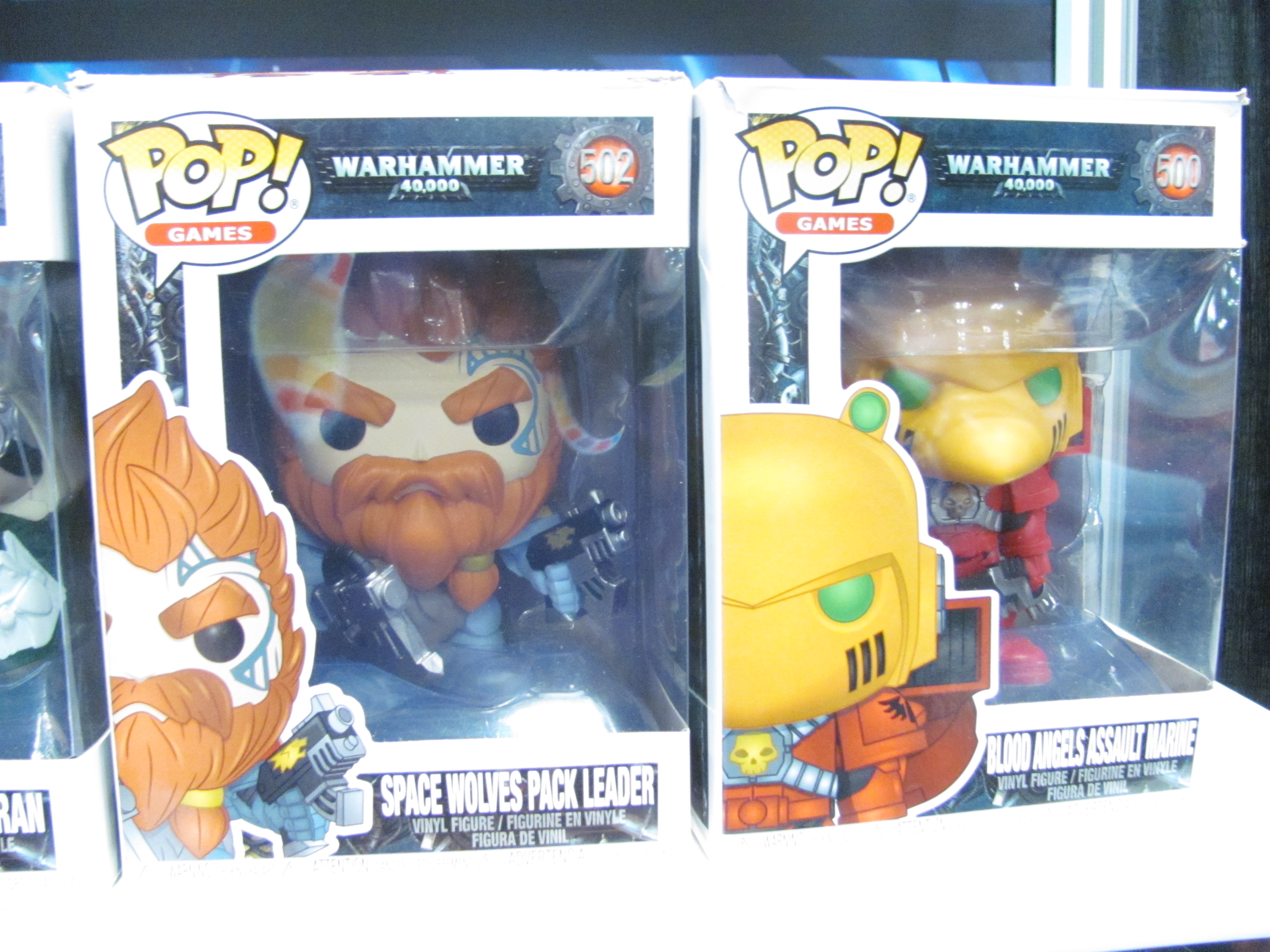
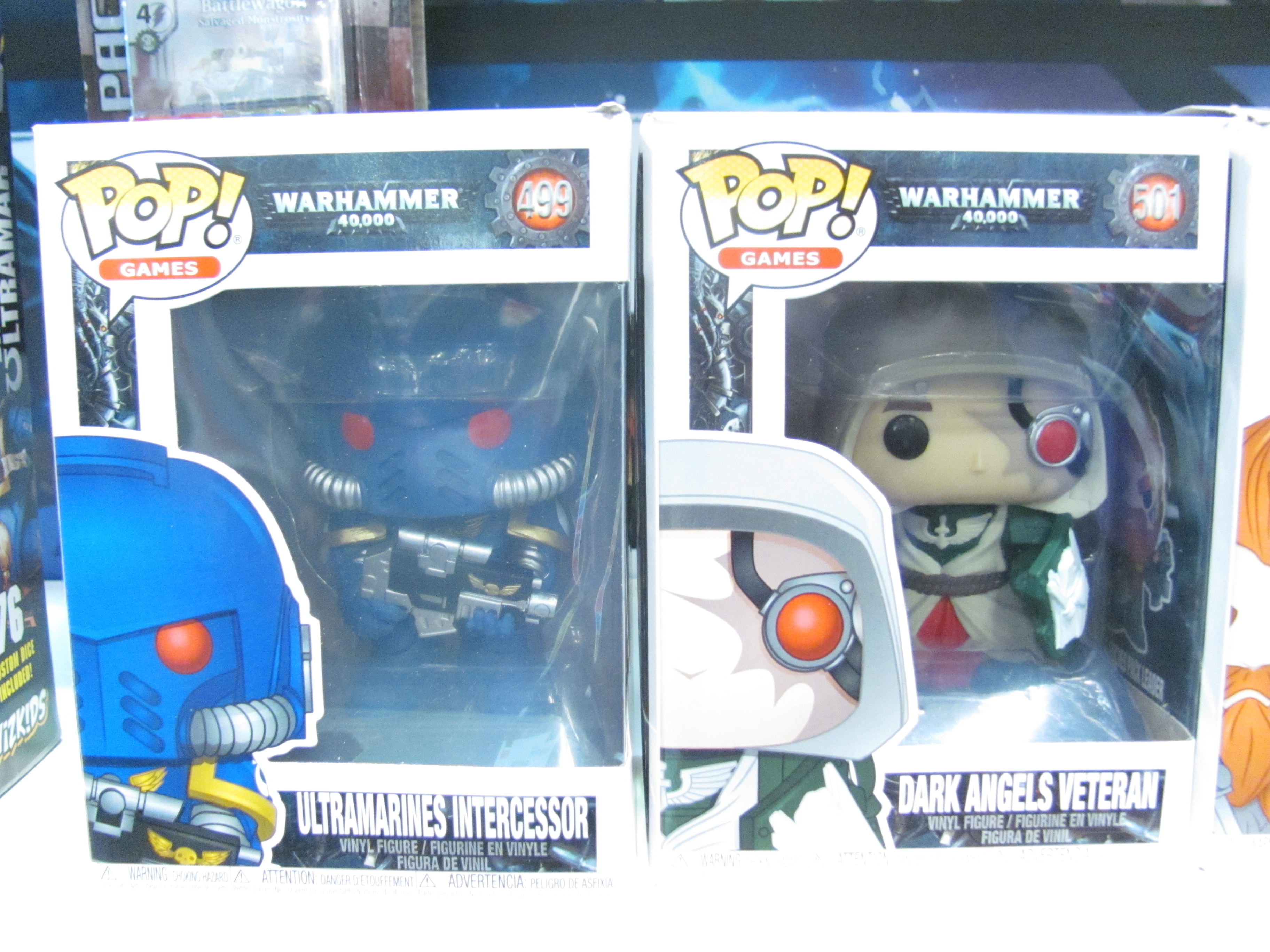
 Along with a few Warhammer 40,000 Funko Pops (due April-May), Games Workshop had on display at the company’s Toy Fair booth prototype mock-ups of three more entries in its series of introductory board games. These are expected to hit retail in the 4th quarter.
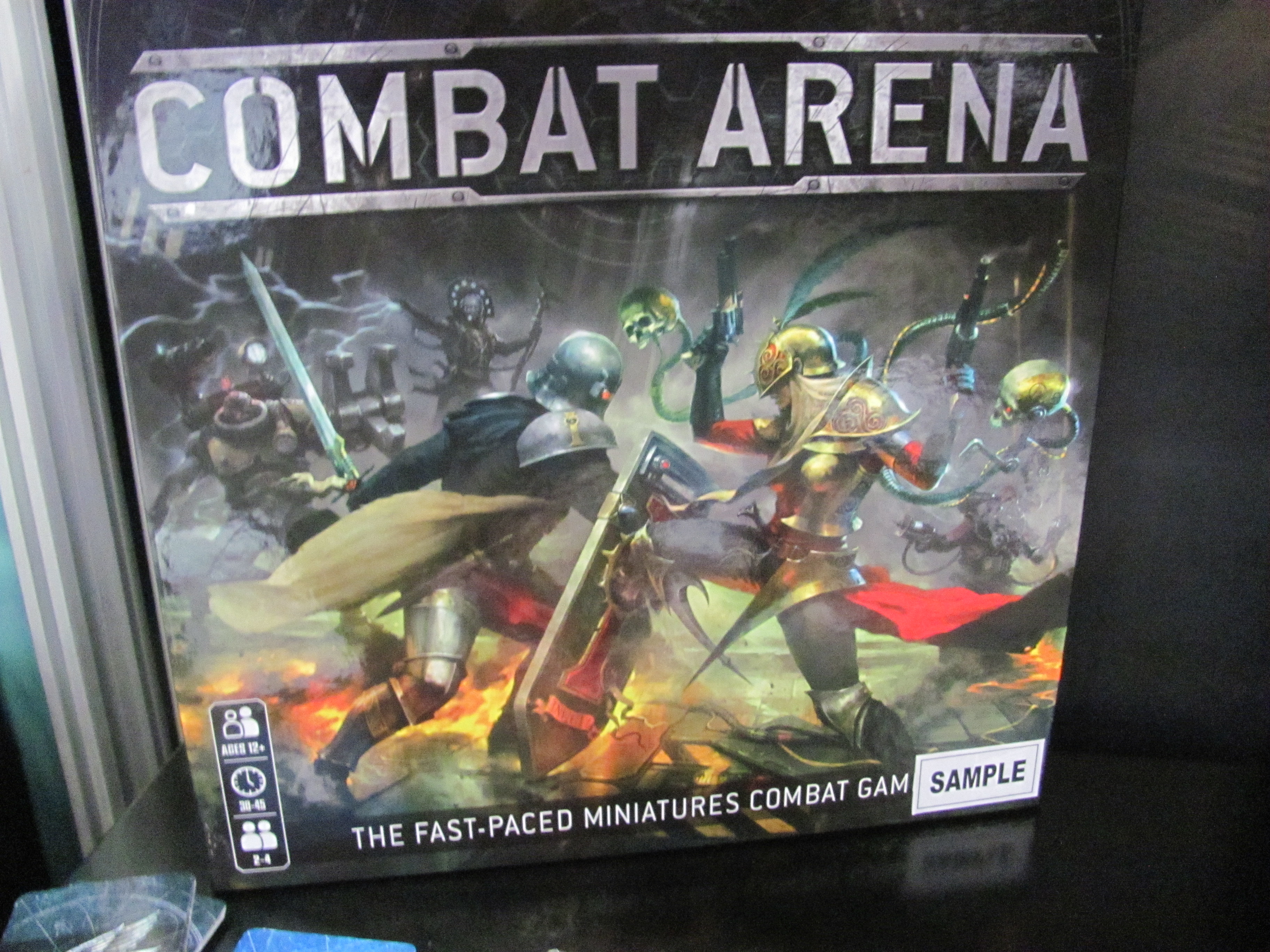
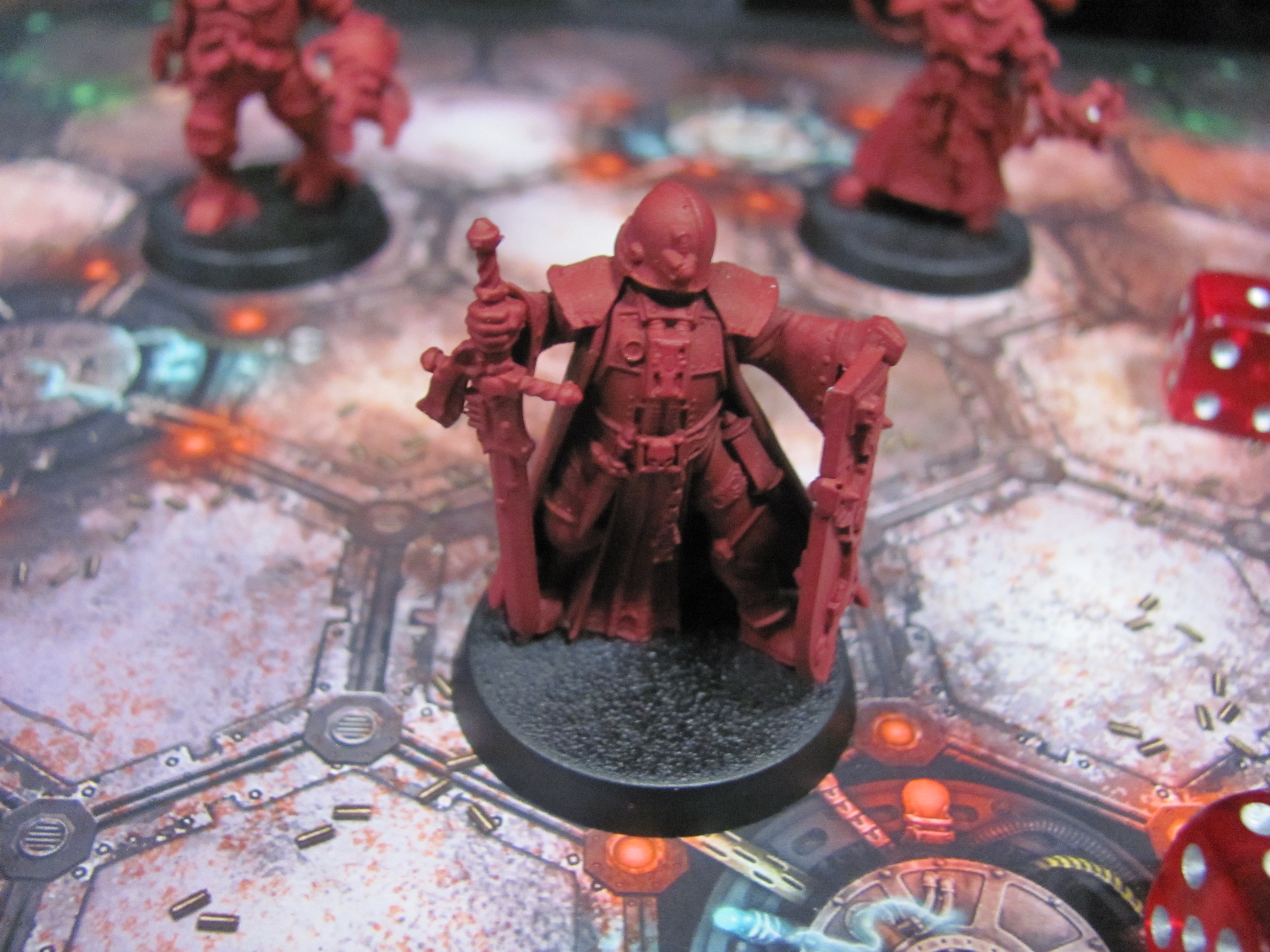
Combat Arena ($40) is a prequel to Warhammer Quest Blackstone Fortress and is similar in complexity to this past year’s intro game, Space Marine Adventures. This one is a dueling game representing a training scenario for one to four characters (one for each player but a total of five are included). Eventually, rules will be provided for integrating Combat Arena characters in to Blackstone Fortress.


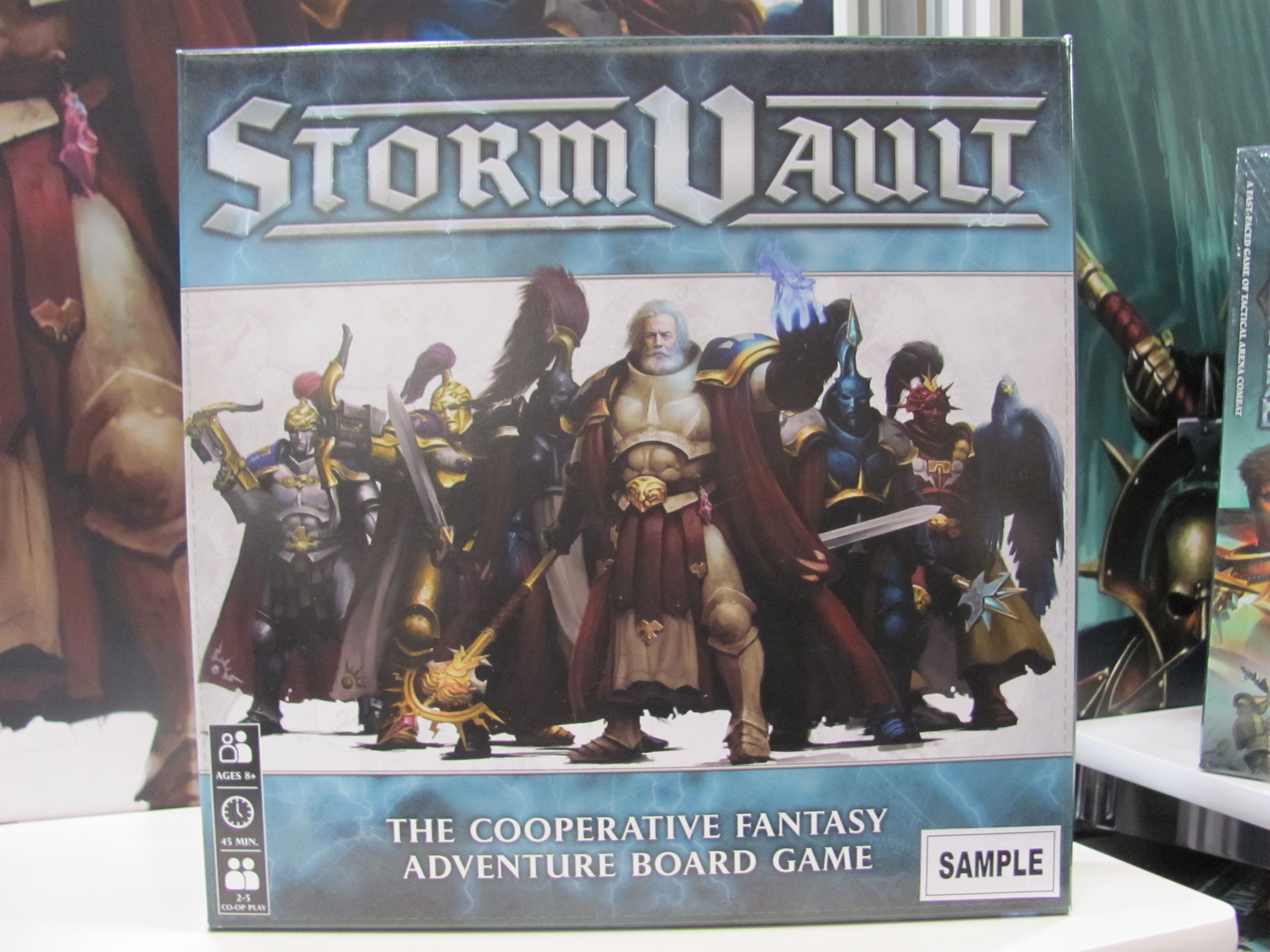
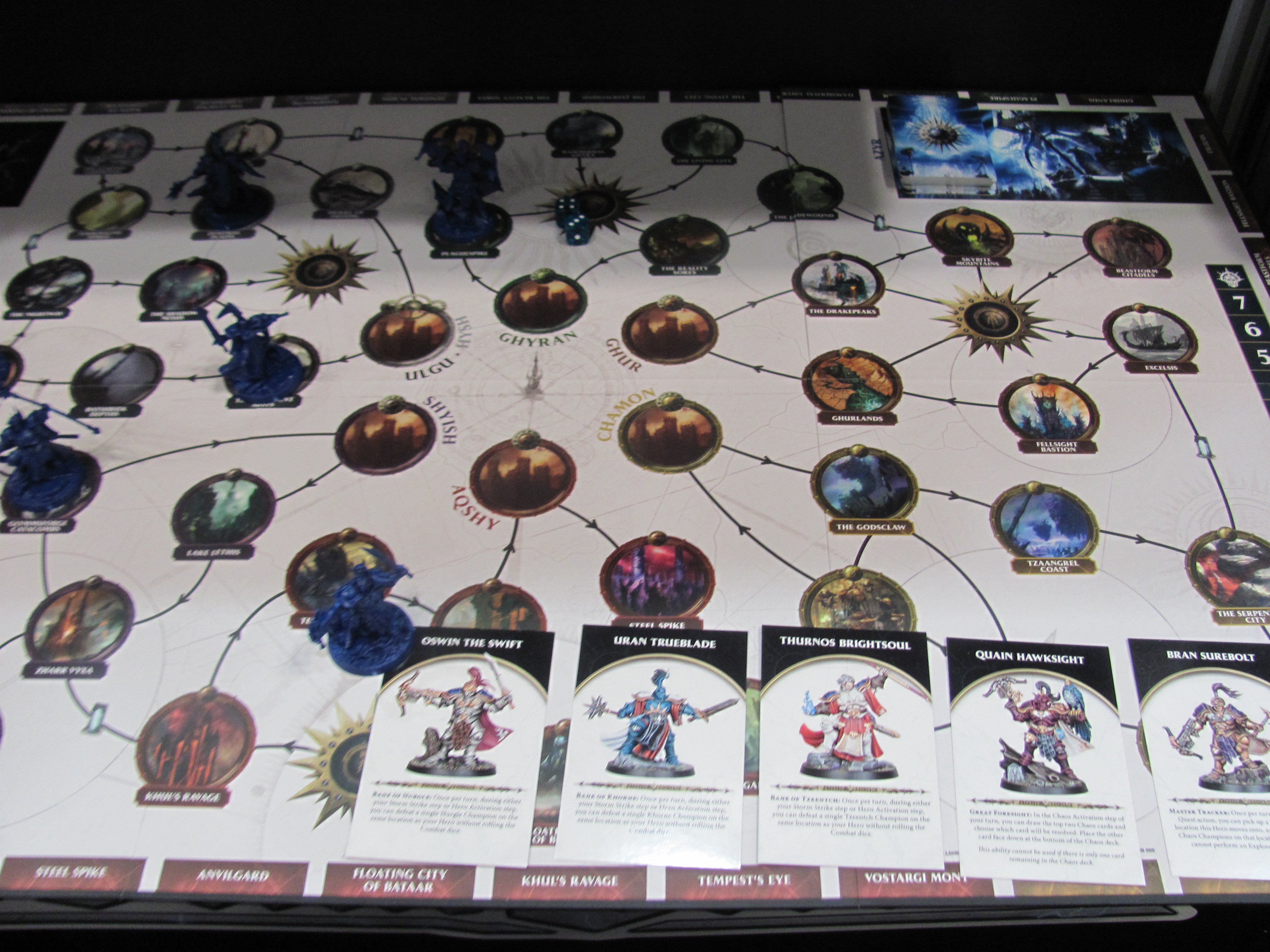
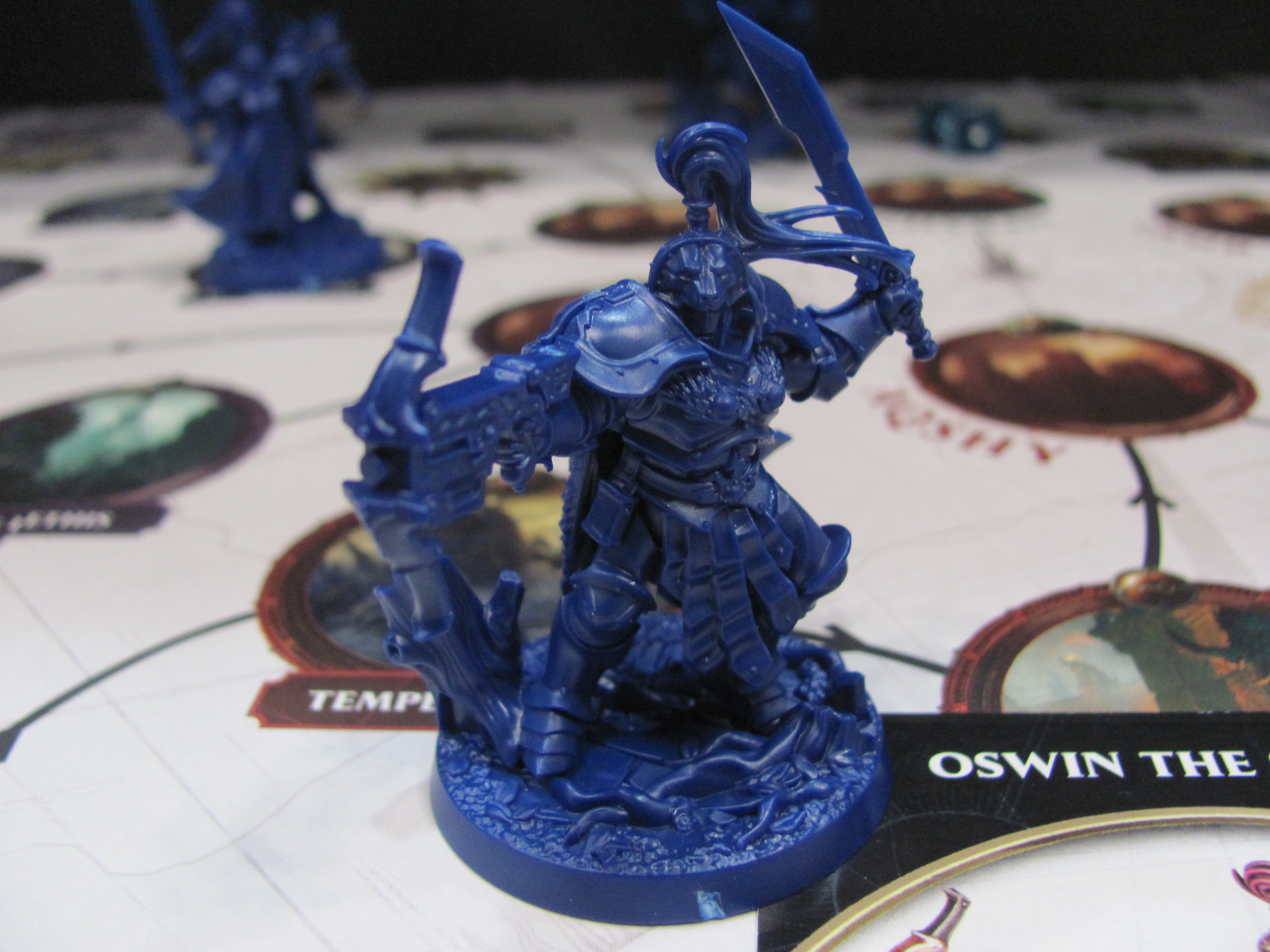
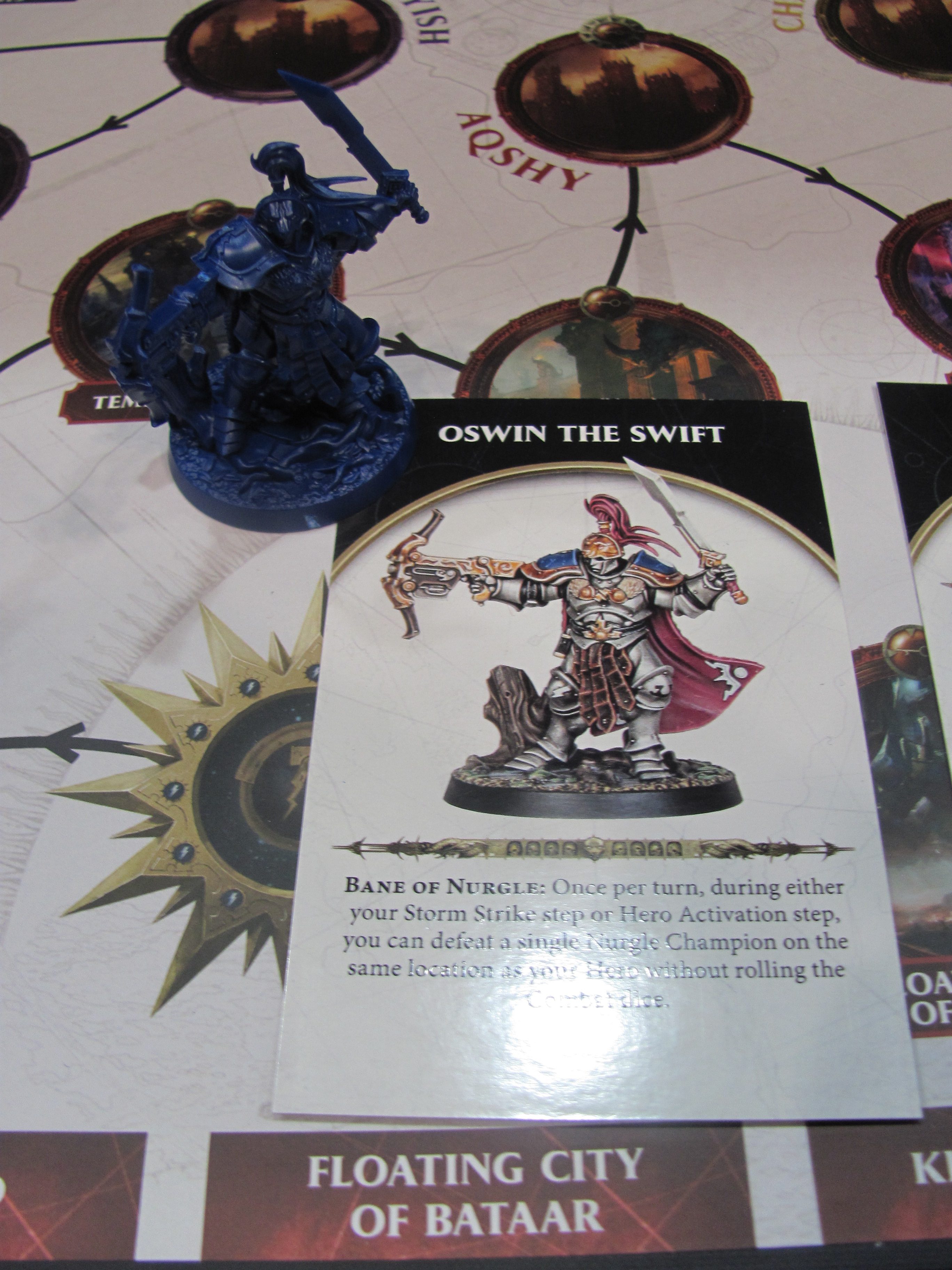
Storm Vault ($45) is a cooperative adventure game in the Age of Sigmar for up to five players. The goal is to find the three keys required to unlock the vault. Every location on the board has a corresponding card, face down along the edge. When a hero stops in a location, the player flips the card, revealing either a key or some other possible benefit. Every turn, the players will also draw chaos cards, spreading foes around the board. Chaos foes are represented by cardboard tokens but for heroes there are Age of Sigmar minis, each with its unique special abilities.
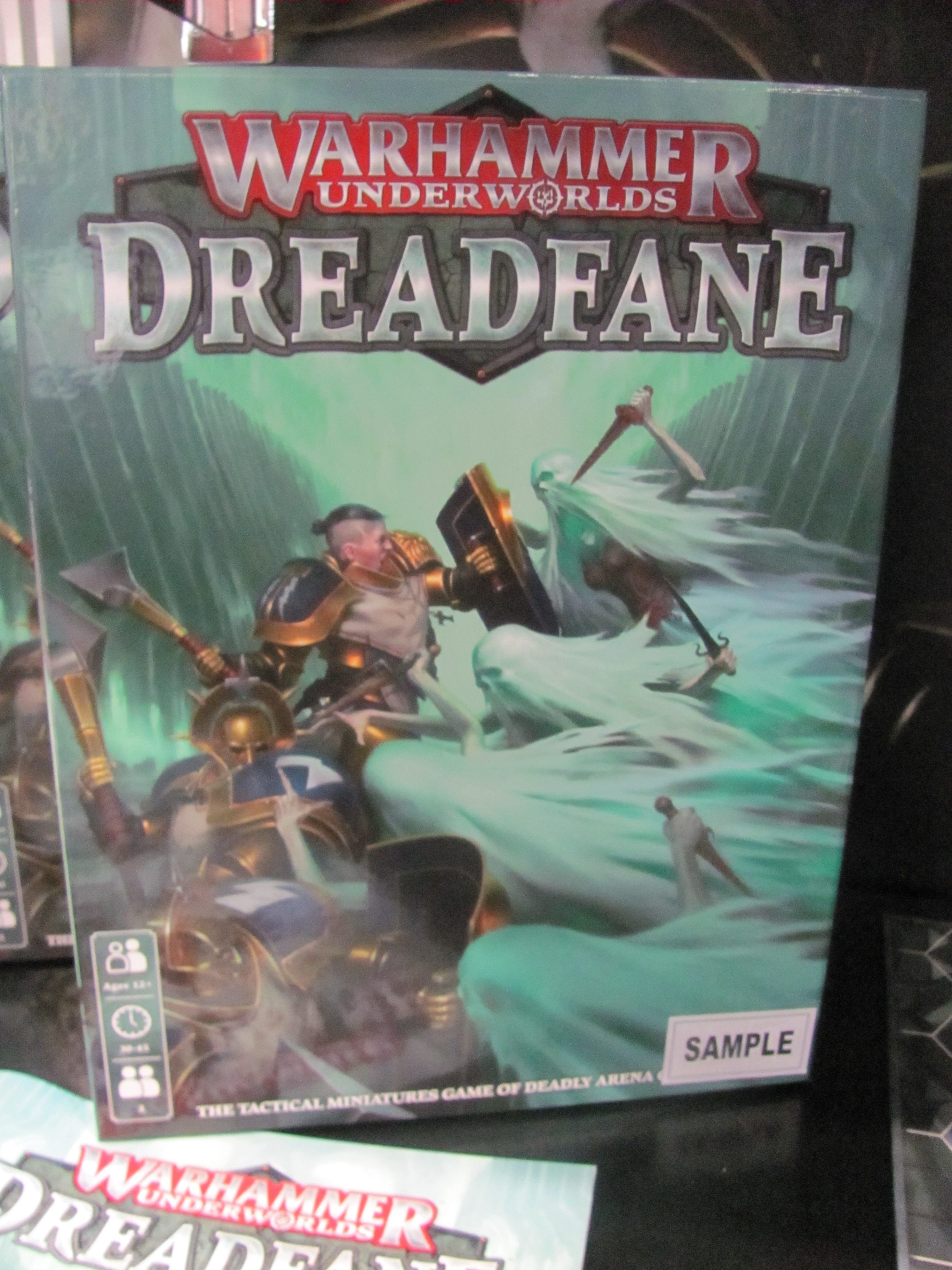
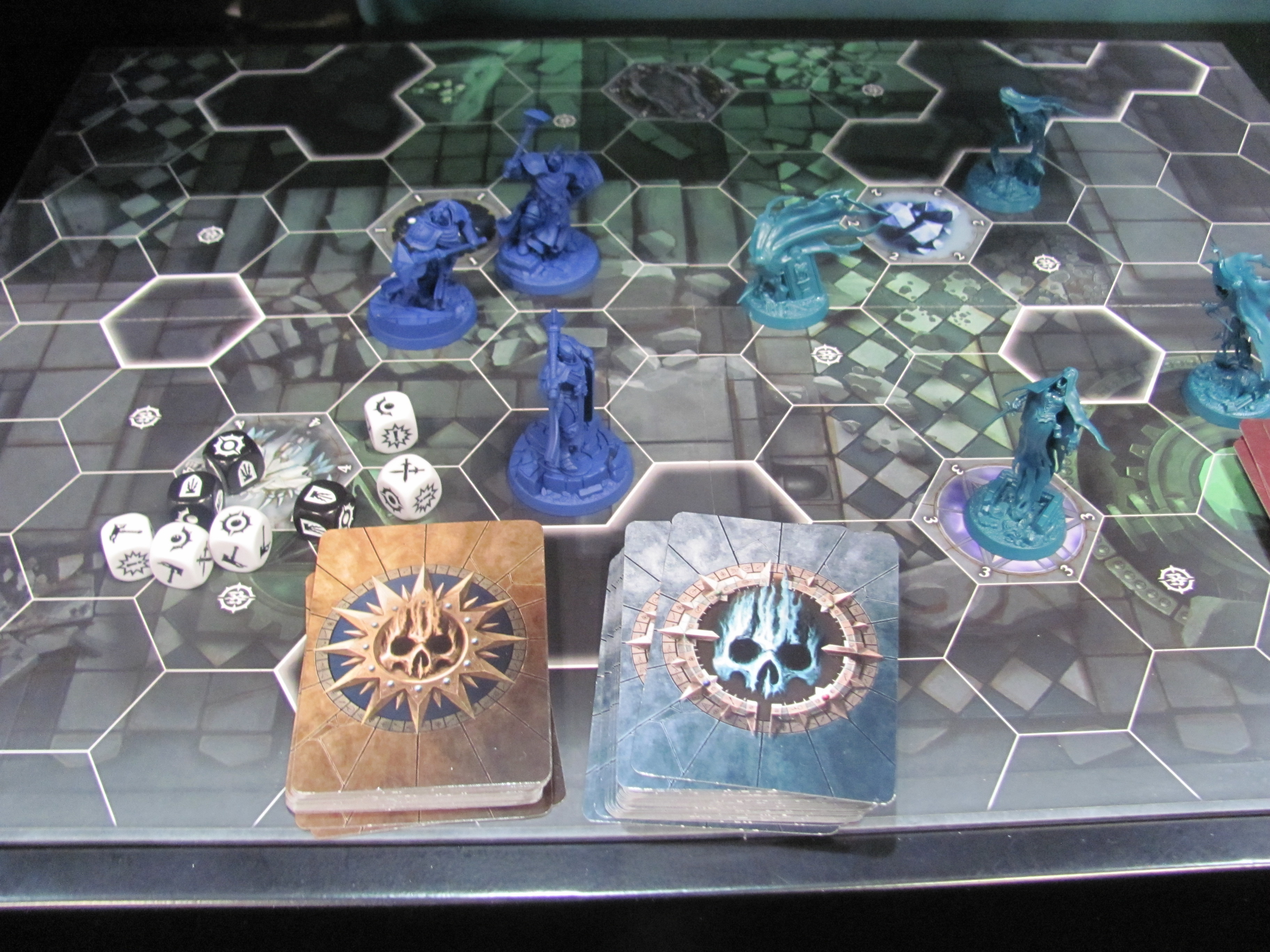
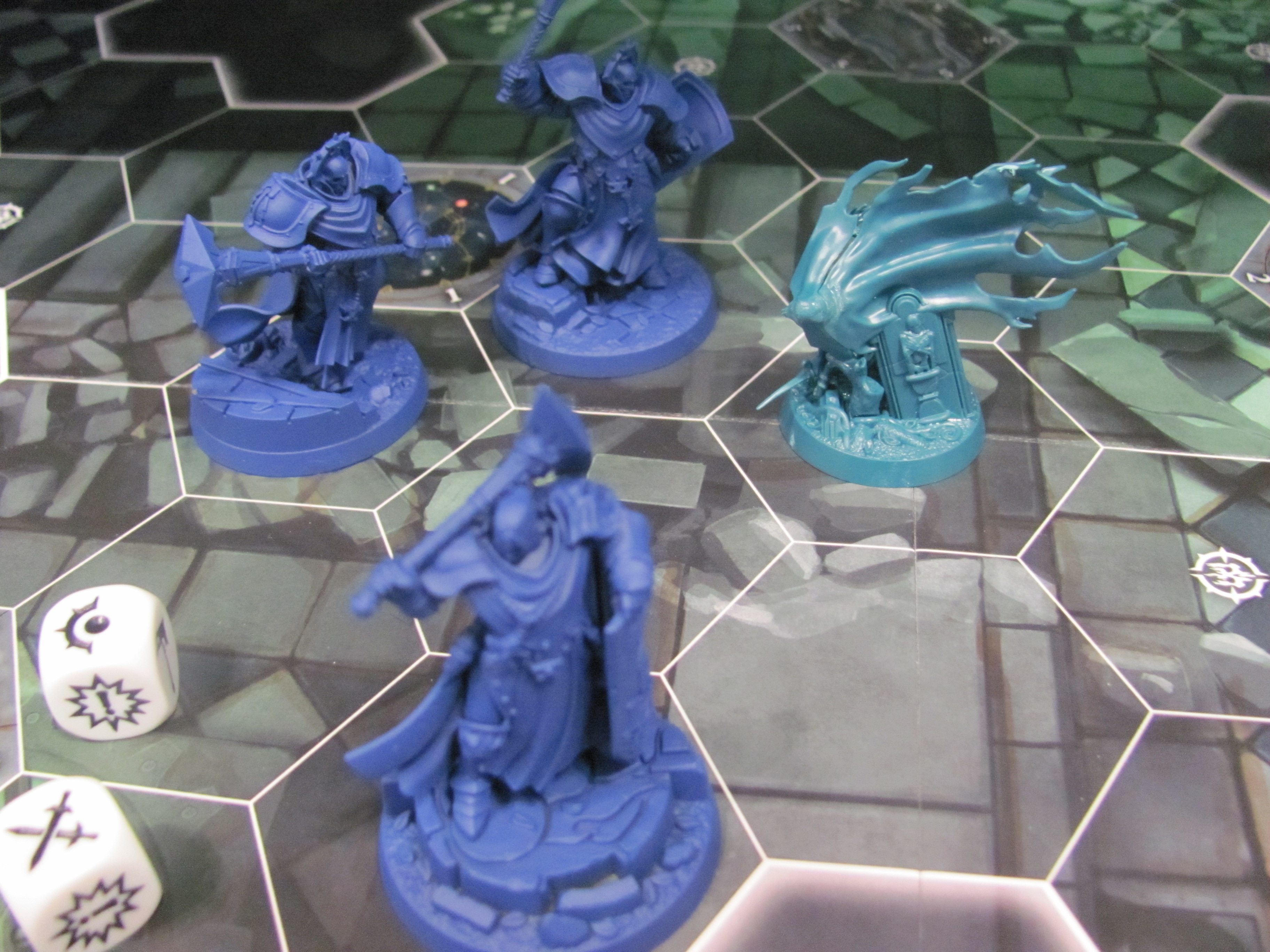
Warhammer Underworlds Dreadfane ($50) is a trimmed down but compatible version of Underworlds. It has predefined objectives and no magic.
- Comments Off on Toy Fair 2019—Games Workshop
2018 A Difficult Year For Hasbro But Not For D&D Or MtG
11 Feb
Posted by David Miller as Card Games, CCGs, Classic Board Games, Electronic Games, Miniatures, Modern Board Games, RPGs, War Games
 According to market data firm The NPD Group, annual retail sales of toys in the United States declined 2 percent from 2017 to 2018. For games, that decline was 1 percent.
Against that backdrop, Hasbro has reported that 2018 net revenue fell 12% compared to 2017, mostly due to the Toys “R” Us bankruptcy. The retailer was Hasbro’s third largest customer in the United States, second in Europe and Asia. Additional earnings pressure resulted from other retailers moving to leaner inventories and from political-economic events in Europe (particularly the U.K.).
The failure of Toys “R” Us meant not only the loss of a major retail outlet for Hasbro but also competition from a large amount of inventory being liquidated at significant discount. Excluding Toys “R” Us, however, sales at existing U.S. and Canadian retailers were up slightly, “mid-single digits” for the games category.
While Hasbro recorded an overall year-to-year drop in revenue of 9 percent in its franchise brands category and 12 percent in its gaming category, Beyblade, Dungeons & Dragons, Monopoly, and Magic: The Gathering all grew in 2018. Also on the upside among games were Jenga and Don’t Step in It, offset by downturns to Pie Face and Speak Out. When viewed as a broader category (MtG and Monopoly are normally counted in franchise brands), games were only down 4 percent to $1.4 billion compared to 2017.
Again, 2018 was a record year for Dungeons & Dragons. Regarding the future, CEO Brian Goldner said, “Our plans for an expanded universe of gaming behind D&D is taking shape in analog and digital game play.”
Noting that Magic: The Gathering Arena is still in the beta-testing phase, Goldner also revealed that the so-far-PC-only platform saw 350 million games played in the 4th quarter. Viewership on Twitch doubled. And Arena users are averaging 8 hours played per week.
- Comments Off on 2018 A Difficult Year For Hasbro But Not For D&D Or MtG
Hot Jobs
07 Feb
Posted by David Miller as Card Games, CCGs, Electronic Games, Miniatures, Modern Board Games, RPGs, War Games
 Troy University in Alabama is looking for adjunct faculty with tabletop experience to teach online Game Design and Development classes.
Along with several sales and distribution positions, Learning Resources has an opening for a Marketing Coordinator to handle social media and influencer campaigns and support trade shows.
At Educational Insights in Gardena, California, there are opportunities for an Associate Marketing Manager, to manage PR, social media, and the company’s customer loyalty program, and a Product Manager, to lead conceptualization, manage vendor relationships, and collaborate with functional teams as required in the development of new products.
ThinkFun in Alexandria, Virginia has an opening for a Human Resources Manager.
Wizards of the Coast in Renton, Washington is recruiting for:
- Principal Game Designer, requiring significant experience and a passion for Magic, The Gathering.
- Creative Lead to help grow the company’s digital business (Magic, D&D, and Avalon Hill).
- Director of Communications and Publicity, skilled at both corporate and brand-level communications.
- Product Marketing Manager, supporting regional development and localization for MtG.
- Principal Game Designer for digital publishing, requiring at least 8 years of AAA experience.
Tabletop Tycoon in Londonderry, New Hampshire needs an Accounting & Bookkeeping Lead. Responsibilities include developing budgets, reviewing invoices, and managing workflows.

Games Workshop has many openings in sales and retail, also one for a Trainee Citadel Miniatures Designer and a one for a Visual Merchandising Manager. The former will sculpt minis. The latter will create product displays.
An unnamed United States board game manufacturer is looking for a UK Marketing Director, among who’s responsibilities will be managing two PR companies and an advertising agency.
Bezier Games is in need of an experienced, full-time Social Media Manager to generate buzz. The position is based in Knoxville, Tennessee.
Renegade Game Studios is seeking a Development Coordinator to manage the playtesting process from its San Diego office. The company is also looking for a Video Editor to help with 1-2 projects per month.
Atlas Games has an opening for a Marketing Coordinator in Duluth, Minnesota. The successful candidate must have industry knowledge, as well as skills in writing, editing, analytics, and task management.
- Comments Off on Hot Jobs
Game Bandit
04 Feb
Posted by David Miller as Card Games, Miniatures, Modern Board Games, RPGs, War Games
 Through February, Osprey Publishing is discounting books, ebooks, and games up to 70%.
Nearly 30 of Monte Cook Games’ Numenera books, adventures, maps, and more are available at Humble Bundle all together for just $15.
Decision Games’ Deal of the Month (February) is discounts on Axis Empires series titles, 34% if you buy both Totaler Krieg and Dai Sensou.
Evil Hat Productions, to clear out inventory, has priced 30 items at $10 or less.
Gayme Master is giving away The Ultimate RPG Character Background Guide by James D’amato.
Tilted Table is giving away two copies of Nosh from Crafty Games, one live on Wednesday and one by drawing on Friday.
Emily is giving away three sets of dice, two to random retweeters, one to the person who correctly guesses the number of dice in the cup.
Mail4Rosey is giving away The Wimpy Kid 10-Second Challenge from Pressman.
Amazon-hosted giveaways:
- Game of Kingdoms
- Polyhedral dice set
- Bull Sh*t Card Game and Bull Sh*t Card Game
- Giant Yard Dice Game
- Comments Off on Game Bandit
Game Bandit
15 Jan
Posted by David Miller as Card Games, CCGs, Miniatures, Modern Board Games, RPGs, War Games
Get a free Bones Black Owlbear figure for every $40 of order from Reaper Miniatures. Similar deals will apply through 2019 with a different figure each month.
Hasbro games are on-sale at Target.
Modiphius Entertainment’s January Sale includes deals such as the Star Trek Adventures Gamemaster Bundle with a 15% discount on the rule book, map, GM screen, player reference sheets, dice, and tokens.
Game tables are 20% off in Geeknson’s Winter Sale.
In 18 days, Meeple Gamers will give away North Star Games’ Evolution on Android or iOS to 25 winners.
Follow and retweet, today, Pandasaurus Games for a chance to win Machi Koro 5th Anniversary Edition.
To celebrate 3 million podcast downloads, HappyJacks RPG is giving away a set of Ancient Dragon Dice from Easy Roller Dice.
Mister Tarrasque has arranged for a 10% discount on anything from Kobold Press.
At Bundle of Holding, the Oone Dungeons offer features a generic dungeon maps.
Get free promo cards with preorders of Judge Dredd: The Cursed Earth from Osprey Games.
Get a set of alternate ship cards with any Blood & Plunder ship order from Firelock Games.
Miniature Market has instituted a new daily deal system, where the price of the item on-special is dropped each day by 5% until it sells out.
Erica Ever After is giving away Mastermind from Pressman Toy.
Super Samar is giving away two game bundles, one for the United States and one for the United Kingdom.
- Comments Off on Game Bandit
Hot Jobs
11 Jan
Posted by David Miller as Card Games, Classic Board Games, Miniatures, Modern Board Games, RPGs, War Games
 The St. Louis Chess Club and World Chess Hall of Fame has openings for a Gallery Attendant, a Retail Associate, and a Graphic Designer. The last includes significant management responsibilities, such as assigning tasks to other staff, selecting vendors, and representing the organization to the public.
Modiphius Entertainment has openings in its London office for a Finance Assistant (full or part-time), a Marketing & Communications Manager, and a Logistics Assistant. The Finance Assistant will handle bookkeeping, accounts payable, and account receivable. The Marketing & Communications Manager will promote the company’s products to distributors, reviewers, and customers. The Logistics Assistant (or Manager) will require experience with imports and exports and freight arrangements. The company is also looking for a Freelance Layout Artist to work remotely.
Gen Con is looking for a temporary Administrative Assistant for the Events Team. The job starts in February and lasts until August. Location is Seattle.
Atlas Games is looking for a Marketing Coordinator at its office in Duluth. The position requires knowledge of marketing analytics and the hobby game industry.
American Sign Language Proficient RPG Game Masters are wanted by RPG Therapeutics to run games in Spokane, Washington.
 A full-time Chess Coach with at least an International Master rating is wanted by The University of Texas at Dallas. In addition to training the team, the Coach will also be responsible for recruiting students at international tournaments.
PSI is recruiting for a Vendor Account Coordinator to manage relationships with board game publishers “leading to the development of customer delight.”
The Field Museum in Chicago is recruiting for an After School Game Designer. It’s a temporary part-time position for the spring program in which teens will create board and card games about freshwater ecosystems.
Good Games in Indianapolis is planning to expand its e-commerce business and needs an Online Sales Manager.
Galileo Learning runs a summer camp for elementary school-aged children in Mahanoy Plane, Pennsylvania, where it needs a Game Design Instructor.
STAR is looking to hire a Dungeons & Dragons Teacher for elementary after-school programs in Culver City, California.
Hasbro is looking to hire a Contract Graphic Designer to work on the Transformers TCG.
- Comments Off on Hot Jobs
World’s Tallest Dice Tower
03 Jan
Posted by David Miller as Miniatures, Modern Board Games, RPGs, War Games
Recall those modular dice towers from The Broken Token? With some extra samples on hand, the product’s inventor Corey Young assembled what he claims is the world’s tallest dice tower, over 11 feet tall. True record or not, that’s certainly an impressive dice tumbler!
- Comments Off on World’s Tallest Dice Tower
Game Bandit
30 Dec
Posted by David Miller as Card Games, CCGs, Electronic Games, Miniatures, Modern Board Games, RPGs, War Games
At Bundle of Holding, the Adventures in Middle Earth offer gets you six products for Middle Earth roleplaying with Dungeons & Dragons 5th Edition for $30. And the Doctor Who RPG offer includes core rules and six supplements for $32.
At Humble Bundle, the 5E Dragons, Dungeons, Maps & More bundle includes dozens of third-party D&D adventures, supplements, and print-and-play products, everything for $15.
Digital board games from Acram Digital, including Instanbul and Steam: Rails to Riches, are up to 60% off in the company’s Winter Sale.
Save 10% through tomorrow at The Broken Token with code “TREATYOSELF”.
Warlord Games’ Bad Santa Deals means selected Gates of Antares products are 50% off, ebooks are 20% off, and among other deals you get a free plastic box set with the purchase of any core box.
Discounting 12 RPG ebook titles 99% off regular retail price is Skirmisher Publishing’s Holiday Festivity bundle at DriveThruRPG.
- Comments Off on Game Bandit
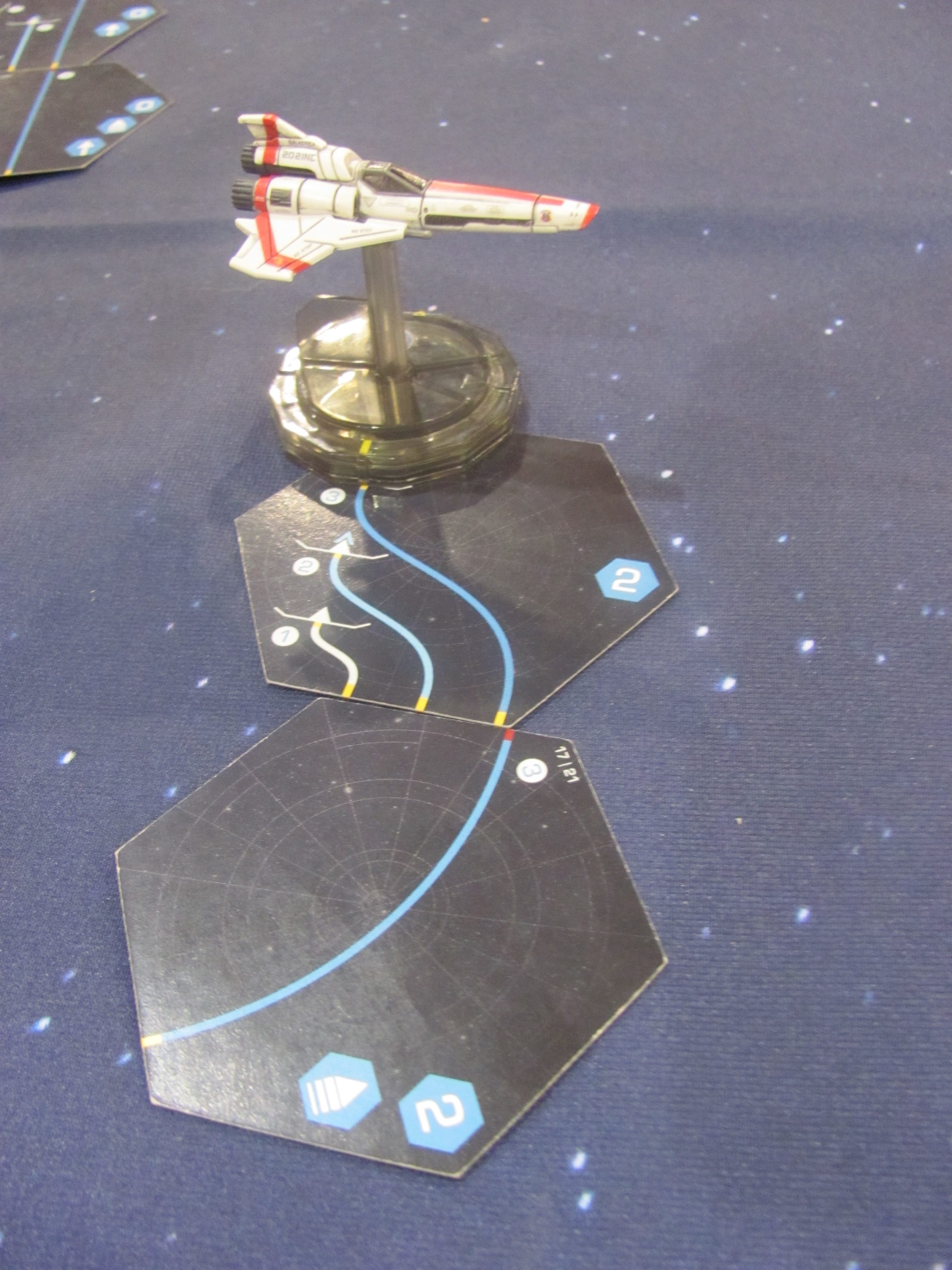
 Just in time for PAX, Ares Games’ launched to retail Battlestar Galactica Starship Battles ($60). It’s a spaceship miniatures combat game in some ways similar to other such games on the market. Movement is facilitated by templates. There are cards for various pilots. And draw tokens to determine damage.
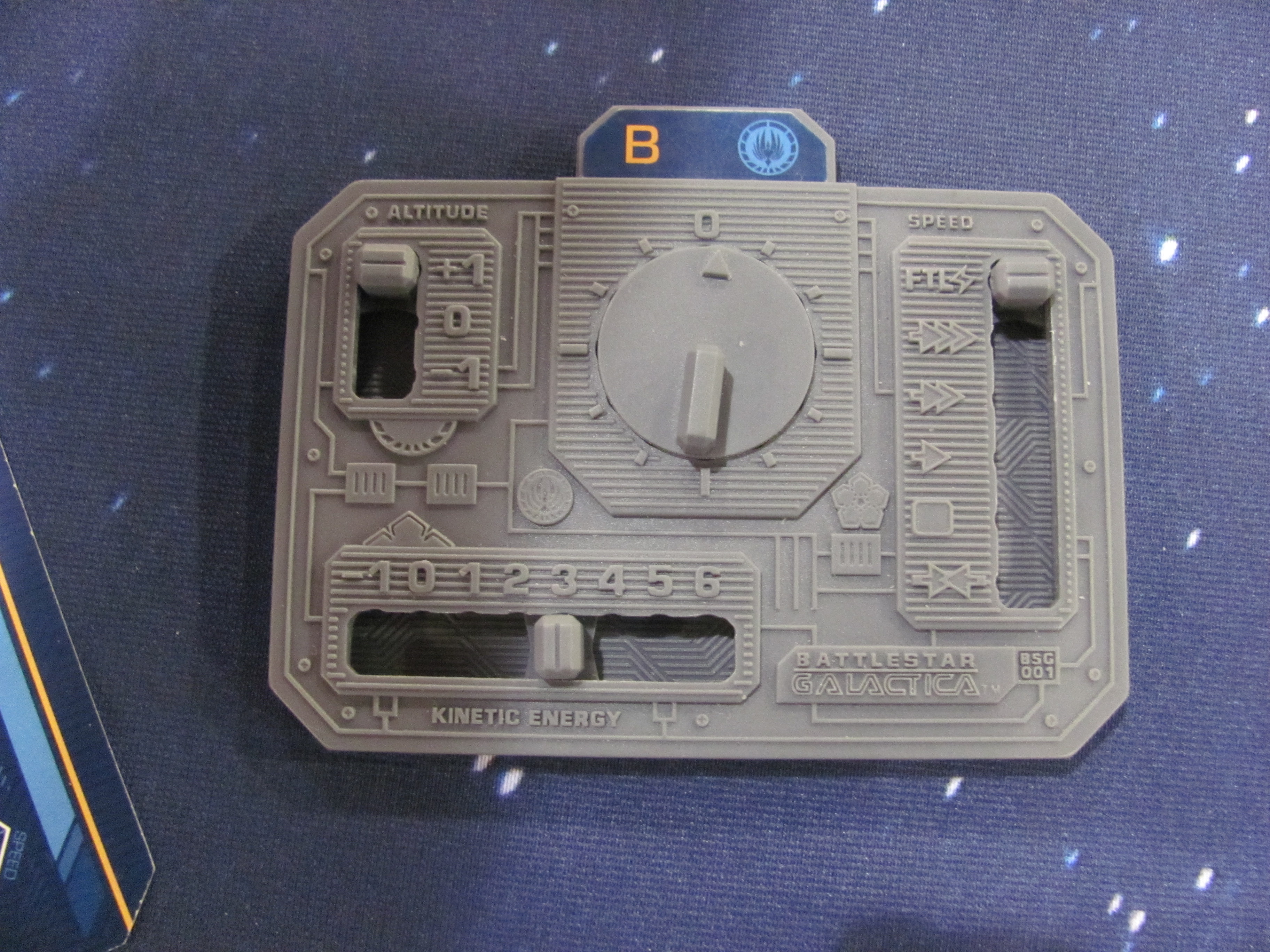
Like its namesake television show, however, the game features an added level of realism for spaceship movement. Ships carry momentum from round to round. They can face and fire one direction while moving in another. And the game even carries rules for elevation. Kinetic energy and other maneuvering factors are tracked for each ship on a small, individual plastic control panel.
Battlestar Galactica Starship Battles starter sets come with four prepainted plastic ship figures, two Colonial Vipers and two Cylon Raiders.


- Comments Off on PAX Unplugged—Ares Games
Game Bandit
09 Dec
Posted by David Miller as Card Games, Electronic Games, Miniatures, Modern Board Games, RPGs, War Games
Hollandspiele’s Hollandays Sale includes all the company’s games. Additionally, use discount code “MONSTERDEAL” for 10% off orders of $100 or more.
Michigan Savings and More is giving away Utter Nonsense Family Edition from PlayMonster.
Auroch Digital’s Steam games are on-sale. Achtung! Cthulhu Tactics is 20% off and Ogre is 50% off.
At DriveThruRPG:
- Goodman Games’ Holiday Modules for Dungeon Crawl Classics are 40% off.
- WarDrumRPG’s isometric mapping tools are available in an Epic Isometric Bundle at 50% savings.
- Shadows of Esteren titles from Agate RPG are 66% off.
- Raging Swan Press’ Christmas PDF Megabundle is priced at a savings of 93% and the Christmas Print Megabundle is priced at a savings of 33%.
Amazon roleplaying game deals:
- Mouse Guard Boxed Set for 54% off.
- Paizo’s Starfinder Core Rulebook for 53% off, Armory for 54% off, and Alien Archive 2 for 55% off.
- WOTC Dungeons & Dragons’ Player’s Handbook for 55% off; Dungeon Master’s Guide and Monster Manual for 58% off; Starter Set for 40% off; Xanathar’s Guide to Everything for 58% off; Dragon Heist for 58% off; and Guildmasters’ Guide to Ravnica for 58% off.
- Paizo’s Pathfinder Bestiary 4 for 40% off and Pathfinder Unchained for 43% off.
Amazon board game deals:
- New York 1901 from Blue Orange Games for 58% off.
- Dominion and Dominion Intrigue from Rio Grande Games for 37% off. Dominion Prosperity for 41% off.
- Broom Service from Ravensburger for 39% off.
- Betrayal at House on the Hill from WOTC for 47% off.
- Terraforming Mars from Stroghold Games for 36% off.
- Above and Below from Red Raven Games for 46% off.
- Pandemic Iberia from Z-Man for 54% off.
- Battle Sheep from Blue Orange for 38% off.
- Portal: The Uncooperative Cake Acquisition Game from Cryptozoic for 44% off.
- Massive Darkness from CMON for 45% off.
- In the Year of the Dragon from Ravensburger for 58% off.
- Santorini from Spin Master for 38% off.
- The Rose King from Kosmos for 46% off.
- Dice City from AEG for 43% off.
- Survive Space Attack! from Stronghold Games for 45% off.
- Abaddon from Toy Vault for 75% off.
Renegade Game Studios is giving away a new game every day on Twitter though December 18th.
USAopoly is also giving away a new game every day, through December 12th, but the winner must follow the company on Twitter, Facebook, and Instagram.
Get a free Christmas-themed miniature for every $40 of order from Reaper through the 16th.
Use promo code “GAMEAWARDS” for a free 25 card set in Magic: The Gathering Arena.
Try Small Things is giving away Googly Eyes, Mastermind, Wordsearch, and Sequence from Goliath Games and Pressman Toy.
Enter to win a weekly giveaway by Asmodee UK.
Terraforming Mars upgrades are 15% off at Top Shelf Gamer.
Trending
- Massdrop.com
- Oh the Irony—Illuminati Card Game Continues to Inspire Conspiracy Theorists
- Home
- Footprints, an Educational Ecology Game
- USPS Adds Board Game Flat Rate Box
- Baila, the Estonian Drinking Card Game
- Crystal Caste Wins Dice Patent Suit Against Hasbro
- Mirror Game, Red and Blue
- Hasbro and Mattel Merger?
- Are Board Games Dangerous?



Archives
Most Popular Articles
- Oh the Irony—Illuminati Card Game Continues to Inspire Conspiracy Theorists
- The 20 Most Valuable Vintage Board Games
- The Truth About Dominoes On Sunday in Alabama
- Sequence Game, and Variants
- USPS Adds Board Game Flat Rate Box
- Baila, the Estonian Drinking Card Game
- The 13 Most Popular Dice Games
- Are Board Games Dangerous?
- Guess Who? The Naked Version
- What Happened to the Jewel Royale Chess Set?
Recent Posts
- Toy Fair 2019—Breaking Games
- Talisman Kingdom Hearts Edition
- Toy Fair 2019—Winning Moves
- Toy Fair 2019—Games Workshop
- Toy Fair 2019—Star Wars Lightsaber Academy
- Toy Fair 2019—Stranger Things Games
- Toy Fair 2019—HABA
- Licensing Roundup
- Game Bandit
- 2018 A Difficult Year For Hasbro But Not For D&D Or MtG
Recent Comments
- on Toy Fair 2019—Winning Moves
- on Game Bandit
- on Second Look—Dungeons & Dragons Waterdeep Dragon Heist
- on Crowdfunding Highlights
- on Beyblade SlingShock
- on Game Bandit
- on Game Bandit
- on Watch This Game!, the Board Game Review Board Game
- on Second Look—Vampire: The Masquerade 5th Edition
- on Palladium Books Loses Robotech IP License, Cancels Five-Year-Overdue Robotech RPG Tactics Kickstarter