


RPGs are role-playing games, where components are usually dice and rulebooks, games are typically open ended, and story and playacting often take a large role.
Paper Money Highlights
25 Dec
Posted by David Miller as Card Games, Electronic Games, Modern Board Games, RPGs, War Games
 Spin Master has singed a 3 year licensing agreement with Warner Bros. Consumer Products for DC comics properties. The agreement covers games, puzzles, action toys, remote control and robotic vehicles, and water toys beginning in spring 2020.
PlayMonster (5 Second Rule, Yeti in My Spaghetti) is partnering with Audax Private Equity to finance additional expansion through “organic growth and add-on acquisitions.”
Goliath continues to grow, acquiring U.K. based Vivid Toy Group and moving in to the Italian market through a partnership with distributor MacDue. With the acquisition of Vivid, Goliath plans to launch 20 new games in the U.K. market next year.
Drumond Park has signed on with Tomy UK as exclusive distributor for all the former’s games in the U.K. and Ireland.
NSKN Games (Dice Settlers, Teotihuacan) and Board & Dice Games (Beet Empire, Dice Brewing) are merging. The combined company will continue operations under the Board & Dice name.
With the passing of designer Greg Stafford and earlier Stewart Wieck, of the games’ latest publisher, Nocturnal Media, the RPGs King Arthur Pendragon and Prince Valliant have been transferred again to Chaosium.
After a couple of messy PR situations involving insensitive or extremist material in game books, Paradox Interactive is stepping back from the publishing business but not abandoning the World of Darkness altogether. Instead, Paradox is moving to a licensing model and integrating White Wolf’s operations in to the parent company. Modiphius Entertainment, which was already handling distribution, is taking over development and publication for Vampire: The Masquerade 5th Edition. This will include production of various supplements (such as The Fall of London Chronicle and Players Guide), as well as oversight of other licensees (Onyx Path Publishing, Elderwood Academy, Dogmight Games, and others).
Impressions Game Distribution Services is being acquired by Flat River Group. The latter is a toy and game distribution company with business in e-commerce and crowdfunding fulfillment. Impressions founder Aldo Ghiozzi will continue with the combined company.
Scientific Games and Hasbro have extended their license agreement through 2025. The agreement covers the use of Hasbro properties, including Monopoly, Battleship, Clue, Yahtzee, and others for lotteries, slot machines, online gaming, and now also table games.
- Comments Off on Paper Money Highlights
 Streamer PlayingBoardGames is giving away Sonic The Hedgehog Crash Course from IDW. Tweet and follow required.
A Games & Puzzles bundle at Humble Bundle includes …For Dummies books on Poker, Chess, Dungeons & Dragons, and more.
Everything is 30% in Victory Point Games’ Christmas Sale.
Mom’s Choice Awards is giving away Blurble from North Star Games.
Family-friendly RPGs are discounted in DriveThruRPG’s Teach Your Kids to Game Sale.
Pangea Games on Facebook is giving away Scythe from Stonemaier Games.
Iello is giving away Decrypto.
Save on a variety of games in Eagle-Gryphon’s Stocking Stuffer Sale, plus an additional 10% with orders of $50 and 20% with orders of $99.
The Family Gamers is giving away the Home Alone Game from Big G Creative this evening.
Bundle of Holding has two Cyberpunk offers from R. Talsorian Games, Cyberpunk 2020 and Cyberpunk Boost. The latter includes the game’s third edition core rulebook. Also at Bundle of Holding is a Warhammer RPP 1E offer with this game’s first edition rulebooks and Enemy Within campaign.
Board game deals at Walmart include:
- Founders of Gloomhaven from Cephalofair Games for 54% off.
- Twister from Hasbro for 53% off.
- Rubik’s Race from University Games for 55% off.
- Monopoly Gamer from Hasbro for 55% off.
- One Night Ultimate Werewolf from Bezier Games for 48% off.
- Perplexus Rookie from Spin Master for 49% off.
- Comments Off on Game Bandit
Game Bandit
09 Dec
Posted by David Miller as Card Games, Electronic Games, Miniatures, Modern Board Games, RPGs, War Games
Hollandspiele’s Hollandays Sale includes all the company’s games. Additionally, use discount code “MONSTERDEAL” for 10% off orders of $100 or more.
Michigan Savings and More is giving away Utter Nonsense Family Edition from PlayMonster.
Auroch Digital’s Steam games are on-sale. Achtung! Cthulhu Tactics is 20% off and Ogre is 50% off.
At DriveThruRPG:
- Goodman Games’ Holiday Modules for Dungeon Crawl Classics are 40% off.
- WarDrumRPG’s isometric mapping tools are available in an Epic Isometric Bundle at 50% savings.
- Shadows of Esteren titles from Agate RPG are 66% off.
- Raging Swan Press’ Christmas PDF Megabundle is priced at a savings of 93% and the Christmas Print Megabundle is priced at a savings of 33%.
Amazon roleplaying game deals:
- Mouse Guard Boxed Set for 54% off.
- Paizo’s Starfinder Core Rulebook for 53% off, Armory for 54% off, and Alien Archive 2 for 55% off.
- WOTC Dungeons & Dragons’ Player’s Handbook for 55% off; Dungeon Master’s Guide and Monster Manual for 58% off; Starter Set for 40% off; Xanathar’s Guide to Everything for 58% off; Dragon Heist for 58% off; and Guildmasters’ Guide to Ravnica for 58% off.
- Paizo’s Pathfinder Bestiary 4 for 40% off and Pathfinder Unchained for 43% off.
Amazon board game deals:
- New York 1901 from Blue Orange Games for 58% off.
- Dominion and Dominion Intrigue from Rio Grande Games for 37% off. Dominion Prosperity for 41% off.
- Broom Service from Ravensburger for 39% off.
- Betrayal at House on the Hill from WOTC for 47% off.
- Terraforming Mars from Stroghold Games for 36% off.
- Above and Below from Red Raven Games for 46% off.
- Pandemic Iberia from Z-Man for 54% off.
- Battle Sheep from Blue Orange for 38% off.
- Portal: The Uncooperative Cake Acquisition Game from Cryptozoic for 44% off.
- Massive Darkness from CMON for 45% off.
- In the Year of the Dragon from Ravensburger for 58% off.
- Santorini from Spin Master for 38% off.
- The Rose King from Kosmos for 46% off.
- Dice City from AEG for 43% off.
- Survive Space Attack! from Stronghold Games for 45% off.
- Abaddon from Toy Vault for 75% off.
Renegade Game Studios is giving away a new game every day on Twitter though December 18th.
USAopoly is also giving away a new game every day, through December 12th, but the winner must follow the company on Twitter, Facebook, and Instagram.
Get a free Christmas-themed miniature for every $40 of order from Reaper through the 16th.
Use promo code “GAMEAWARDS” for a free 25 card set in Magic: The Gathering Arena.
Try Small Things is giving away Googly Eyes, Mastermind, Wordsearch, and Sequence from Goliath Games and Pressman Toy.
Enter to win a weekly giveaway by Asmodee UK.
Terraforming Mars upgrades are 15% off at Top Shelf Gamer.
 OneBookshelf on Thursday announced that it is retiring the RPGNow brand effective this coming February. RPGNow predates DriveThruRPG and for a time was a favorite of the indie crowd but the former has seen fewer and fewer users (customers or publishers) since the two download portals were integrated.
In practical terms, little will change. Visitors to RPGNow.com will be redirected to DriveThruRPG, where the contents and account information are the same.
- Comments Off on OneBookshelf Shuttering RPGNow
Game Bandit—Black Friday Edition
23 Nov
Posted by David Miller as Card Games, CCGs, Classic Board Games, Miniatures, Modern Board Games, RPGs, War Games
From CMON, save up to 80% on select items through Monday.
Save 33% on more than 47,000 items at DriveThruRPG.
Academy Games’ Be Thankful You Are Not Being Invaded by Vikings Sale pairs 878 Vikings with various other games for bundle discounts.
Through Tuesday, all in-stock boxed games from Flying Pig are 50% off.
Also through Tuesday, in-stock games from Tiny Battle Publishing are 25% off.
Subscriptions to the Magnus Trainer mobile Chess training app are 25% off.
Amazon deals:
- Betrayal At House on the Hill from Avalon Hill for 47% off.
- Smash Up from AEG for 46% off.
- Game of Thrones Trivia Game from Fantasy Flight Games for 51% off.
- Qwixx from Gamewright for 44% off.
- Cry Havoc from Portal Games for 48% off.
- 7 Wonders from Asmodee for 40% off.
- Dark Souls from Steamforged Games for 44% off.
- Citadels from Z-Man for 51% off.
- DropMix from Hasbro for 61% off.
- Fallout from Fantasy Flight Games for 53% off.
- Jenga from Hasbro for 59% off.
- Yeti in My Spaghetti from PlayMonster for 56% off.
- Beyblade Burst Avatar Attack Battle Set from Hasbro for 41% off.
- Escape from Colditz from Osprey Publishing for 42% off.
- Shark Bite from Pressman for 67% off.
- Chow Crown from Hasbro for 60% off.
- One Night Ultimate Werewolf from Bezier Games for 50% off.
- HeadBanz from Spin Master for 50% off.
- Spot It! from Asmodee for 46% off.
- Hungry Hungry Hippos from Hasbro for 55% off.
- Googly Eyes from Goliath for 70% off.
- Rummikub from Pressman for 50% off.
- Letters from White Chapel from Fantasy Flight Games for 50% off.
- Speak Out from Hasbro for 55% off.
- Ultra Dash from Playmonster for 51% off.
- Hearing Things from Hasbro for 50% off.
- Giggle Wiggle from Goliath for 60% off.
- Bop It! from Hasbro for 50% off.
- Bugs in the Kitchen from Ravensburger for 49% off.
- Chrono Bomb from PlayMonster for 54% off.
- Chrono Bomb Night Vision from PlayMonster for 48% off.
- Catch the Fox from Goliath for 62% off.
- Pandemic from Z-Man for 50% off.
- Pandemic Legacy from Z-Man for 40% off.
- Pandemic Iberia from Z-Man for 57% off.
- Black Fleet from Asmodee for 63% off.
- Samurai Spirit from FunForge for 57% off.
- Arcadia Quest from CMON for 41% off.
Avalanche Press’ Black November Sale applies to Gold Club members, giving them 30% off 37 different products and 50% off two others.
The first 15 orders save up to €1,000 on Altar gaming tables in Rathskellers’ Black Friday Sale.
Save up to 20% in The Broken Token’s Black Friday Sale.
Meeple Source’s Thanksgiving Sale features discounts of 25-75%.
For 25% off in Firelock Games’s Raise the Black Flag Friday Sale, use coupon code “raisetheblack”.
For 20% off in Breaking Games’ Black Friday/Cyber Monday Sale, use coupon code “BFCM2018”.
For 40% off most books from Goodman Games (excluding leather-bound and third-party products) and 20% off everything else (including the leather-bound books, as well as dice and other accessories) use the following coupon codes: “GGblackfriday2018”, “3PPblackfriday2018”, and “LEblackfriday2018” (multiple codes are accepted).
Mayday Games’ Black Friday Sale includes discounts on various board games, 35% off card sleeves, and free domestic shipping on orders over $50.
U.K. retailer Zatu Games is offering double rewards in its Victory Points loyalty program.
Save 20% in HasbroToyShop’s Friends & Family Sale with promo code “FF20”.
Top Shelf Gamer is offering discounts up to 25% on select products and bundles and free gifts ranging from stickers to dice bags to gift cards, depending on the size of the original order. This Black Friday Bling Weekend Event ends in the early hours of Tuesday.
Save 30% on orders from Renegade Game Studios with promo code “BFSALE”.
All Jon Brazer Enterprises’ Pathfinder PDFs are 75% off. Ends Tuesday.
Discounts are in the 20-45% range in Van Ryder Games’ Thanksgiving Week Sale.
Monte Cook Games’ Cypher Monday Sale starts Monday. Already active, though, is the gift code “2018MCGHolidayGift”, good for $5.
German retailer Spiel Zeit Shop is holding a sale on used and imported games.
Troll & Toad’s Black Friday Sale (discounts up to 60%) end Sunday night.
Drinking Quest games are 20% off.
The Game Crafter’s Turkey Day Giveaway of store credit and parts ends December 4th and will have seven winners.
Coupon code “BlackFriday2018Cards” is good for 10% off card decks from Superior Print on Demand, and “BlackFriday2018Photo” is good for 10% off photo products.
Bundle of Holding’s Indie Cornucopia 6 bundle features Dusk City Outlaws, Spire, and a few more.
90 Second Nerd is giving away Captive from Van Ryder Games.
Sign up for Iron Crown Enterprises’ newsletter for a chance to win $10 off at RPGNow.
To save 33% on purchases from Precis Intermedia, use coupon code “9WAZXMNUYN”.
JasonTDnDDM is giving away the alternate-art Dungeons & Dragon core rules gift set. Retweet by December 12th.
ShimmerwindIsle is giving away a dragon miniature and polyhedral dice set. Twitter stuff required by November 27th.
Cassandra M’s Place is giving away three games from Tactic Games.
Sahm Reviews is running many giveaways, including Dungeon Raiders from Devir, Hero Realms from White Wizard, Blue Lagoon from Blue Orange, and more.
Syrinscape is offering a 30-day free trial to all of its gaming soundsets, including Pathfinder, Dungeons & Dragons, and more.
From Corvus Belli, save up to 50% and get free shipping with orders over €150.
Eagle-Gryphon Games’ Black Friday & Cyber Monday Sale includes discounts up to 50%.
Alderac Entertainment Group is doing bundle deals for its Black Friday Sale.
Greenbrier Games is also doing the bundle thing, plus on Monday, get 10% off with sale code “2018GAMES”.
Hexbug’s Black Friday special BattleBots Championship Bundle is good for $25 savings.
Harn World PDFs from Columbia Games are 33% off with coupon code “thanks”.
Dog Might Games’ Black Friday deals include free dice at orders of $100 and free gift cards at orders of $250. Purchased gift cards are 20% off.
Games listed in Compass Games’ Holiday Catalog [PDF] are 30% off. Get the same discounts when ordering online with coupon code “HOLIDAY18”.
Update (4:00 PM ET, 11/23/2018) with late additions:
Osprey Publishing’s 30% off Black Friday Sale includes Gaslands, Frostgrave, Bolt Action, High Society, and more.
Steve Jackson Games’ Warehouse 23 Hauliday Sale has discounts of 23-75% and free gifts with orders of $25 or more.
Rogue Genius Games has bundles all 117 of the company’s Pathfinder PDFs for just $10 (normally more than $400). They’re calling it the Not Done With This Path Yet Sale.
Kenzer & Company’s Hack Friday Sale includes many items at 50% off.
For 20% off all board games from Capstone Games, use coupon code “HOLIDAYS20”.
The Open Gaming Store is running a Real Stuff Sale on print roleplaying products.
The Infinite Black Friday Sale means 20% off playmats from Infinite Black.
Save 30% on Beasts of Balance with coupon code “BFSAVE30”.
Use the “CRITHIT” code for a $5 savings at Hero Forge.
Everything is 20% off in Litko’s Black Friday Sale.
For 20% savings on Jenga Giant, use code “JengaGiant2018”.
Most things from PSC Games are on-sale for 25% off.
- Comments Off on Game Bandit—Black Friday Edition
Hot Jobs in Tabletop Games
19 Nov
Posted by David Miller as Card Games, Miniatures, Modern Board Games, RPGs, War Games
 Cubicle 7 needs artists and writers for its tabletop RPG team.
The Department of Computational Media at the University of California, Santa Cruz is accepting applications for part-time, on-call Lecturers in fields that include game studies, interactive storytelling, experience design, and board game design.
The Department of Visual and Performing Arts at Quinnipiac University in Connecticut is taking applications for a full-time, tenure-track Assistant Professor in Game Design and Development. The program is focused on “serious, meaningful analog and digital games.”
Steamforged Games in Manchester, U.K. is looking for a Game Developer and a Quality Assurance Playtester. The latter supports the former with testing of products. Both will also assist with marketing efforts.
In Oxford, Osprey Games has an opportunity for a Games Developer to manage board and card game projects. Requires deep knowledge of the game market and organization and negotiation skills.
The Dice Tower is looking for a new full-time Video Editor to work in the Homestead, Florida area starting January.
RPG Therapeutics is looking for experienced Game Masters to run weekly roleplaying game sessions for at-risk youth. The part-time positions in the Spokane, Washington area are paid but also require professional experience in educational settings.
Package Right has openings for Print Power Cutters and Packaging Specialists at its manufacturing plant in Tipton, Indiana. Shifts are 11 hours long.
Ludo Fact is looking for an Assembly Line Supervisor, a Picker and Packer, and a Certified Forklift Operator for its game manufacturing plant in Lafayette, Indiana.
- Comments Off on Hot Jobs in Tabletop Games
Game Bandit
18 Nov
Posted by David Miller as Card Games, Electronic Games, Miniatures, Modern Board Games, RPGs, War Games
Fantasy Grounds is giving away an Ultimate license along with modules for Dungeons & Dragons Guildmaster’s Guide to Ravnica and Waterdeep: Dungeon of the Mad Mage.
ChiTAG and Brilliant PR are giving away a package of eight board games from various publishers.
Game Trade Media is giving away a Dungeons & Dragons prize package that includes the rule books, miniatures, dice, a large format Forgotten Realms map, Endless Quest books, and more.
Spiel Pro has discounted Chessex polyhedral dice sets 20% (expiring on the 23rd).
Man vs Meeple is giving away 12 different board games. The deadline for entries is the 27th.
Missing Sleep is giving away Catan from Asmodee (UK only).
Miniature Market’s Black Friday Sale started early.
In Rogue Games’ Thanksgiving Sale, three RPG titles are 35% off.
Everything is discounted in Noble Knight Games’ Holiday Sale.
Pixelated Cardboard is giving away two download codes for mobile versions of Morels (Android or iOS).
Wyrd Games’ Thanksgiving Birthday Sale includes limited releases and a free figure for orders of $150 or more.
Multi-Man Publishing’s Fall Sale, including some discounts in excess of 50%, ends tomorrow night.
Save up to 40% in Revolution Games’ November Sale.
Get 35 books, everything from the first three editions of the Champions superhero RPG, for just $32 in Bundle of Holding’s Early Champions offer. For the non-superhero stuff from Hero Games, look to the Early Hero System offer.
What’s Eric Playing is giving away two copies of ICECOOL2 from Brain Games.
At ThinkGeek, board games are on-sale 25% off.
In recognition of the product requiring a second manufacturing run, Infinite Black is giving away a complete Elder Dice set, nine polyhedrals plus an extra nine d6s in each of three colors, along with matching boxes.
Renegade Game Studios is giving away Architects of the West Kingdom.
Everything Board Games is giving away Extraordinary Adventures: Pirates from Forbidden Games, Guardians of Wayword from Kid Loves Tiger Games, Between Two Castles of Mad King Ludwig from Stonemaier Games, and two copies of Terminus Breach from Matty Lloyd.
Get a free Christmas Colouring Pad with every order direct from Orchard Toys.
Set Enterprises Early Black Friday Sale means 25% off and free domestic shipping with promo code “THANKS208”. Also, the company will donate a copy of Karma for every one purchased before the 30th. And Set is running giveaways on the company Facebook page.
Post a holiday wish list to Facebook or Instagram by December 1st for a chance to win $250 in Playfoam products and a $250 Amazon gift card from Educational Insights. It’s the Squishlist Giveaway.
The Giveaway Geek is giving away Affectionate Cats and Cuddles from Blue Heron Entertainment, a Kickstarter pledge for Arcane Alley from Strange Space Games, a Kickstarter pledge for Level 7 Omega Protocol from Privateer Press, three copies of BunneeBank from Heeleet, and three copies of Fantasy Pug Quest from Tin Hat Games.
Feisty Frugal & Fabulous is giving away Fortnite Monopoly from Hasbro.
Michigan Savings & More is giving away a package of five games from Endless Games and a separate package of three from ThinkFun.
Mom and More is giving away The Baby Beluga Game from CooperativeGames.com.
Mama’s Mission is giving away three games from Wonder Forge.
- Comments Off on Game Bandit
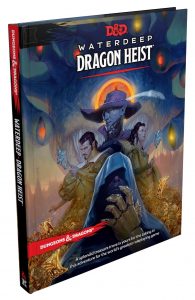 Wizards of the Coast’s Waterdeep Dragon Heist adventure for Dungeons & Dragons is something very different and I’m of two minds about it. Meant for characters levels 1-5, it’s no dungeon crawl, MacGuffin quest, or wilderness expedition, rather an investigative style adventure set in one of the Forgotten Realms’ most famous urban locales. Supplementing that part of the book is a 25 page visitor’s guide to Waterdeep written from the perspective of an iconic Realms character.
On the positive side, Dragon Heist provides a distinctive fun adventure for low-level characters, one that combines interesting combat encounters with a variety of roleplaying opportunities, engaging story, and intrigue-filled backdrop. Part of the way through, the players’ characters may end up owning their own city property to use as a base of operations.
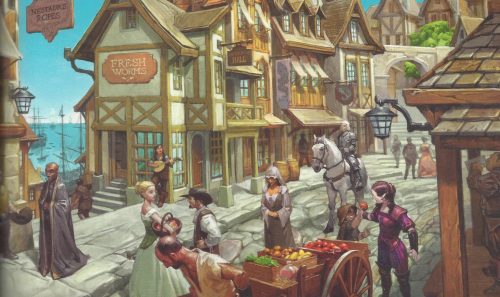
I love how Dragon Heist brings the city of Waterdeep to life with social and political factions, historic and mundane locations, and oh so many characters! The complex life of the city is even reflected in the art, which features a number of normal looking street scenes.
On the negative side are difficult to accept plot devices and confusing superfluous content. Now perhaps I should be more willing to suspend disbelief—players in the games I run tend to be a lot more forgiving—but some of these are very weak or poorly constructed. There’s the sentient artifact that resists revealing its secret to anyone but the player characters, the search for a creature that comes down to borrowing someone’s already-made custom detector device, bad guys that bungle their schemes just enough to attract the characters’ attention, and chase scenes rigged for a certain result.
What bothers me the most, though, is not the adventure but the structure of the product. The book takes 60 pages to describe lairs that, if the story unfolds as intended, the players should never visit. And, while the ultimate prize offered the characters is the same, the book presents four alternate antagonists, each with their own extended encounter sequence. The situations faced in these alternate encounters are different but they’re set in many of the same locations. Except, in a way, the secret location of the ultimate prize. That depends, for no apparent reason, on whom the DM has chosen to oppose the characters.
Why this convoluted setup? More than unnecessary, it creates major characters with inspiring motivations for the story line but then asks you to ignore most of them. I suggest two possible explanations. One, it fills out the page count. The essential part of the adventure is just not enough for a $50 hardcover. Or two, it’s designed to support streaming. Four alternatives to a significant part of the story means more variety among the groups streaming their games, as well as improving the possibility of groups playing at home without the whole story being spoilered by a favorite stream.
With all of this in mind, Waterdeep Dragon Heist presents a fine adventure that is particularly well-suited for new players or others who might be looking for more mystery and more role-playing than dungeon-raiding. New Dungeon Masters, however, might find the details, complexities, and difficult plot issues a bit much to handle. Otherwise, it is a fantastic resource for an urban campaign in the Forgotten Realms. There is so much more than the one story in this product to inspire a DM, hints, hooks, locations, legends, and complex characters.
A complimentary copy of Waterdeep Dragon Heist was provided by Wizards of the Coast for review.
Game Bandit
11 Nov
Posted by David Miller as Card Games, Classic Board Games, Modern Board Games, RPGs, War Games
Save 50% on tickets to the Chicago Toy & Game Fair with coupon code “CHITAGPLAY”.
For the company’s fifth anniversary, Dog Might Games has discounted in-stock items 10-25%.
Xai is giving away RPG-related accessories, including dice, a dice bag, and fantasy-themed scented candles.
Ending at midnight tonight is a giveaway from Blue Orange Games and Bubble Bum that includes three games and an inflatable child’s booster seat.
Save 15% on games from HasbroToyShop with promo code “WINNING!”.
Laid Back Games is giving away Super Mario Level Up! from USAopoly.
Mom and More is giving away The Baby Beluga Game from Child and Nature.
Feisty Frugal & Fabulous is giving away Fortnite Monopoly from Hasbro.
Preorder Yaah! magazine issue number 12 from Flying Pig Games for a 28% discount.
Greenbrier Games has several discounted bundles on-sale for the holiday shopping season.
The latest deal at Bundle of Holding is another collection of Fate games, including Fate Core, Fate Accelerated, Bulldogs, Kaiju Incorporated, and Elysium Flare.
- Comments Off on Game Bandit
Neighborhood Toy Store Day
08 Nov
Posted by David Miller as Card Games, CCGs, Classic Board Games, Electronic Games, Miniatures, Modern Board Games, RPGs, War Games
 This Saturday is Neighborhood Toy Store Day, an opportunity to support your local toy and game retailer before the peak of holiday shopping pressure. Organized by the American Specialty Toy Retailing Association, Neighborhood Toy Store Day also has participating shops running family-friendly activities and offering in-store specials.
Take the opportunity to support a small business in your community.
- Comments Off on Neighborhood Toy Store Day
Trending
- Massdrop.com
- Oh the Irony—Illuminati Card Game Continues to Inspire Conspiracy Theorists
- Footprints, an Educational Ecology Game
- Home
- USPS Adds Board Game Flat Rate Box
- Baila, the Estonian Drinking Card Game
- Crystal Caste Wins Dice Patent Suit Against Hasbro
- Are Board Games Dangerous?
- Board Games Based on Hindu Mythology
- Hasbro and Mattel Merger?




Archives
Most Popular Articles
- Oh the Irony—Illuminati Card Game Continues to Inspire Conspiracy Theorists
- The 20 Most Valuable Vintage Board Games
- The Truth About Dominoes On Sunday in Alabama
- Sequence Game, and Variants
- USPS Adds Board Game Flat Rate Box
- Baila, the Estonian Drinking Card Game
- The 13 Most Popular Dice Games
- Are Board Games Dangerous?
- Guess Who? The Naked Version
- What Happened to the Jewel Royale Chess Set?
Recent Posts
- Toy Fair 2019—Breaking Games
- Talisman Kingdom Hearts Edition
- Toy Fair 2019—Winning Moves
- Toy Fair 2019—Games Workshop
- Toy Fair 2019—Star Wars Lightsaber Academy
- Toy Fair 2019—Stranger Things Games
- Toy Fair 2019—HABA
- Licensing Roundup
- Game Bandit
- 2018 A Difficult Year For Hasbro But Not For D&D Or MtG
Recent Comments
- on Toy Fair 2019—Winning Moves
- on Game Bandit
- on Second Look—Dungeons & Dragons Waterdeep Dragon Heist
- on Crowdfunding Highlights
- on Beyblade SlingShock
- on Game Bandit
- on Game Bandit
- on Watch This Game!, the Board Game Review Board Game
- on Second Look—Vampire: The Masquerade 5th Edition
- on Palladium Books Loses Robotech IP License, Cancels Five-Year-Overdue Robotech RPG Tactics Kickstarter